Nubia's NaviX Ultra Is a Phone That Promises to Operate Itself
ZTE and ByteDance launched the Nubia NaviX Ultra on September 16, a 5,999 yuan phone that runs Doubao's agent at the system level rather than as an app.

On this page
Key takeaways
- ZTE's Nubia brand launched the NaviX Ultra in China on September 16, 2026, calling it the first mass-produced AI-agent smartphone.
- The phone starts at 5,999 yuan for a 12GB+512GB model, with a 16GB+1TB version at 7,499 yuan.
- It runs ByteDance's Doubao assistant at the system level and is triggered by a dedicated orange hardware button.
- Nubia says its software asks partner apps to expose interfaces through MCP and A2A protocols instead of simulating taps, after its earlier M153 prototype was blocked by platforms.
- The device pairs a Snapdragon 8 Elite Gen 5 chip with a 7,100mAh battery and a 6.78-inch 144Hz display, and is available in China first.
Nubia opened its flagship store in Shenzhen on September 16 and put a phone on sale that the company says is the first mass-produced device built around an AI agent rather than an app. The Nubia NaviX Ultra runs ByteDance's Doubao assistant at the system level, is rung up from a dedicated orange button on the side, and starts at 5,999 yuan (roughly $840) for a 12GB+512GB model. A 16GB+1TB version is priced at 7,499 yuan.
Related reading: iPhone Duo Pre-Orders Slip to January 2027 as Apple Warns Against Walk-Ins · Samsung's Galaxy Z Fold8 Lineup Goes on Sale, and the Foldable Grows Up.
The launch, first reported in detail by China Daily and Gizmochina, is a bet that the next meaningful smartphone differentiator is not a camera or a display but a software layer that can complete tasks on the user's behalf. Nubia, a brand owned by ZTE, built the phone with ByteDance, the parent company of TikTok and Douyin. The two companies have been working toward this since the limited M153 engineering prototype, which sold out and drew heavy markups on resale before running into a wall.
The pitch: an agent, not an assistant
Nubia frames the phone around four capabilities: understanding natural language, completing multi-step tasks, remembering context across sessions and keeping processing on the device. The company says a single voice command can chain actions, such as booking a restaurant, messaging the details to a friend and setting a reminder without separate prompts for each step. The Gate news service reported at launch that the AI operation feature achieves more than 80% end-to-end task success and can work with system apps, ByteDance apps and selected third-party applications.
That framing is not just marketing language. The distinction Nubia draws is between a phone with AI features bolted on and a phone whose operating system treats the agent as a first-class component. "The essential difference is this: previous AI phones were 'hardware with AI features tacked on'," Ni Fei, president of ZTE's terminal business division, told China Daily. "An AI-agent phone has the phone itself becoming an intelligent assistant." The agent is reachable by voice or by the physical button, a design choice that treats the assistant as a hard input rather than a gesture buried in software.
Why the M153 failed, and what changed
The NaviX Ultra exists because the M153's approach did not scale. The earlier prototype relied on reading the screen and simulating human touches to drive other companies' apps. That worked until platforms decided it was unwanted automation. WeChat and other services blocked the M153, which is why the phone became a collector's item rather than a product.
The new device changes the mechanism. Nubia and ByteDance moved to standardized Model Context Protocol and A2A interfaces, a shift the companies describe as going from forced entry to requested access. Under that model, partner apps proactively expose services, data and operations to the Doubao assistant. More than ten partner platforms, including Douyin, Luckin Coffee, Qunar, Meituan and Didi, are integrated, according to China Daily.
That is a more durable design, but it also means the agent's reach is limited by business deals rather than technical capability. An assistant that can only operate apps that have signed on is less impressive in practice than a demo that controls everything through simulated taps. It also gives platforms veto power over what the agent can do, which is precisely the leverage the M153 episode showed they are willing to use.
Hardware in the current flagship mold
The NaviX Ultra is a conventional 2026 flagship underneath the software. It uses Qualcomm's Snapdragon 8 Elite Gen 5 platform, a 6.78-inch 1.5K OLED display with a 144Hz refresh rate, and a 7,100mAh battery with 90W wired and 50W wireless charging, according to specification listings. The rear carries a triple camera array across a wide bar, and the phone ships in blue, black, white and a finish Nubia calls Dreamscape.
One component is a small milestone. Nubia confirmed the phone uses LPDDR5X memory from China's ChangXin Memory Technologies running at 10,667Mbps, which the memory maker describes as the first mass-produced domestic module at that speed. That is a modest but real data point in China's effort to build a domestic supply chain for high-performance memory, a category where HBM shortages have been driving up prices across the AI industry this year.
Nubia completed large-language-model registration and received Ministry of Industry and Information Technology approval on September 1, clearing the regulatory path for a China launch. International availability has not been announced, and a China-first rollout is expected.
The agent-phone race is only starting
Nubia is not alone in betting that agents will redefine the phone. Samsung and Google have pushed Gemini deeper into the operating system, and Apple's reported deal to bring Alibaba's Qwen models to iPhones in China points in the same direction. Tencent has spent the year wiring agent capabilities into WeChat itself, with its Xiaowei assistant gaining agent-to-agent communication. The strategic question is whether the agent belongs to the operating system, as Nubia and ByteDance argue, or to a super-app that already owns the user's time and payments, as Tencent's approach implies.
"It's a good test of whether users actually want to delegate tasks to a phone-level agent, or whether they'll keep doing things themselves," Lin Keyu, a senior analyst at Counterpoint Research, told China Daily, adding that 2026 "can be regarded as the 'first year of the agent smartphone'." The market backdrop makes the experiment harder. IDC forecasts global smartphone shipments could decline 13.9% year on year in 2026, driven by memory shortages and other pressures, which pushes vendors toward premium features as a way to protect margins.
What to watch
The interesting number is not the 5,999 yuan starting price but the 80%-plus task success rate, and whether that holds outside a controlled launch. An agent that fails one time in five is frustrating enough that users may stop trusting it, which would strand the assistant layer as another underused feature. The partner list is the other variable: if Nubia and ByteDance keep adding services, the phone becomes more capable over time. If developers treat the agent as a channel to be managed rather than a platform to embrace, the NaviX Ultra will be remembered as an ambitious first attempt rather than the template for the next decade.
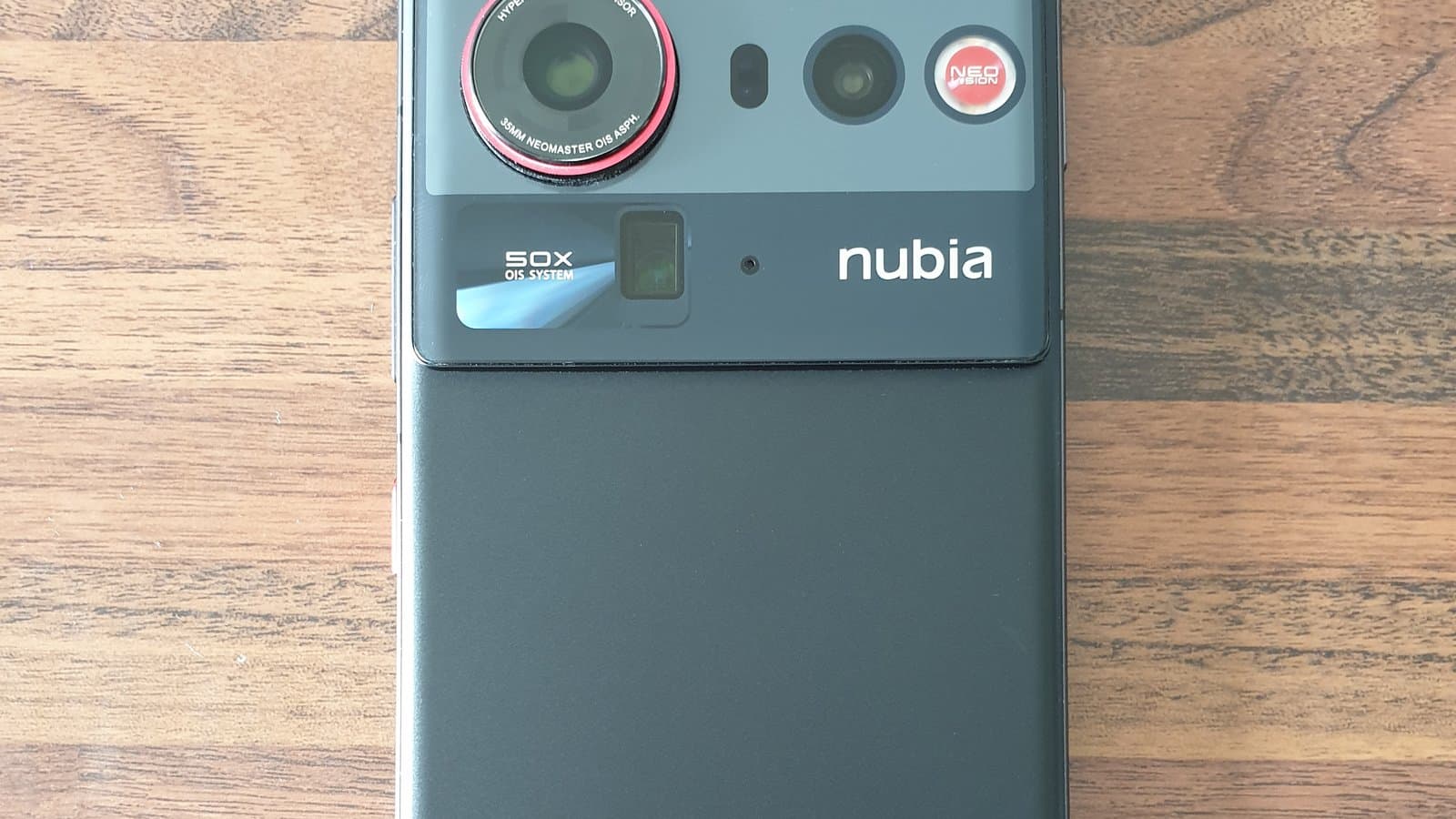
Cover image: a Nubia Z80 Ultra from the same brand. Nubia has not published an official NaviX Ultra press image, so this photo shows an earlier Nubia model. Photo by Skorp24 via Wikimedia Commons, CC BY-SA 4.0.
Tags
Frequently asked questions
- What is the Nubia NaviX Ultra?
- It is a smartphone launched by ZTE's Nubia brand on September 16, 2026. Nubia calls it the first mass-produced AI-agent phone because ByteDance's Doubao assistant is built into the system and can carry out multi-step tasks across supported apps, rather than living in a single chat app.
- How much does the Nubia NaviX Ultra cost?
- In China the 12GB+512GB model starts at 5,999 yuan, and the 16GB+1TB model is priced at 7,499 yuan. Nubia has not announced broad international availability.
- How does the AI agent operate apps?
- Nubia said it shifted to standardized Model Context Protocol (MCP) and A2A interfaces, so partner apps expose services and data to the assistant by design. That is a change from its earlier M153 prototype, which read the screen and simulated touch and was later blocked by major platforms.
- What are the key specifications?
- The NaviX Ultra uses Qualcomm's Snapdragon 8 Elite Gen 5 chip, a 6.78-inch 1.5K LTPO OLED display at 144Hz, up to 16GB of LPDDR5X memory, 512GB or 1TB of storage and a 7,100mAh battery with 90W wired charging.

TPW Editorial
Editorial Team
TechPastWeek's editorial team reports and edits every story we publish. We research each piece against primary and credible secondary sources, and a human editor reviews and signs off before it goes live.