Fujitsu Puts Its Made-in-Japan 2nm Arm CPU on Sale in November, Chasing Sovereign AI
Fujitsu says its made-in-Japan 2nm MONAKA Arm CPU and new server go on sale in November, claiming twice the AI inference throughput of rival processors.

On this page
Fujitsu will begin selling its next-generation FUJITSU-MONAKA processor and a matching server worldwide in November 2026, the company announced on September 14. The CPU will be sold on its own to cloud and data-centre operators and to server vendors, and inside the made-in-Japan Fujitsu MONAKA Server.
Related reading: Qualcomm's Snapdragon 8 Elite Gen 6 Brings 2nm and 30B-Parameter AI to Android Flagships · Intel Can Fill Only About Half of CPU Demand as AI Inference Strains Its Fabs.
The announcement turns a chip Fujitsu has discussed for years, and previously described as a 2027 product, into a dated commercial schedule. It also gives Japan's largest IT vendor a clear answer to a question that has hung over the project: who buys a home-grown 2-nanometre Arm CPU when the server market is dominated by x86 designs and by chips from American vendors? Fujitsu's answer is the state, broadly defined, and the businesses that answer to it.
A 2nm chip that spends big only where it helps
FUJITSU-MONAKA is built on a 3D-stacked architecture. The compute cores sit on a state-of-the-art 2-nanometre die, while the last-level cache and the input/output sections use a 5-nanometre process, with the core die placed on top so data moves vertically between them. Fujitsu credits the arrangement with lower latency and higher throughput than sending the same traffic across a board.
The mix is a cost decision as much as an engineering one. The 2nm node is the most expensive ingredient in the package, so Fujitsu applies it only to the core die and keeps the leading-edge area under about 30 percent of the total. The cache and I/O can then use a cheaper, more mature process. The company's product page calls this heterogeneous process integration and frames it as a way to balance performance, power and cost.
On paper the chip is competitive with leading server designs. It runs at a maximum operating frequency of 3.8 gigahertz and moves memory at 8,800 megatransfers per second. It is built on Arm's version 9 architecture with the SVE2 vector extensions, and it adds dedicated instructions to accelerate matrix operations, the arithmetic that dominates neural-network inference. With software tuning, Fujitsu says the combination doubles AI inference throughput compared with other CPUs and improves power efficiency enough to halve the number of servers and the power drawn for the same work.
I/O support covers CXL 3.0 and PCI Express 6.0. The server line adds CDI/CXL resource pooling, which lets memory and accelerators be assigned across physical machine boundaries, and the CPU supports confidential computing through Arm's Confidential Compute Architecture, encrypting data while it sits in memory.
Sovereign, in Fujitsu's sense
Fujitsu uses “sovereign AI” to mean infrastructure a country can buy, host and audit without ceding the compute layer to foreign suppliers. The MONAKA Server is designed, developed and assembled in Japan, and Fujitsu pairs it with its Kozuchi AI platform, its Takane enterprise generative AI and industry-specific models to form a vertically integrated stack.
The server is the more concrete product
CPU and server both go on sale in November 2026 in Japan and Europe, with shipments following from April 2027. The server comes in 1U and 2U rack-mount models, using one or two CPUs and two CPUs respectively, and Fujitsu plans a 2U multi-node variant with four two-CPU nodes for academic and high-performance computing workloads. Buyers named in the announcement include data-centre operators, enterprises, universities and research labs, and the defence sector.
The efficiency claim attached to the hardware is unusually specific. Fujitsu says the 1U server can run air-cooled at ambient temperatures up to 40 degrees Celsius and water-cooled at water temperatures up to 45 degrees, without the specialised cooling plant that dense GPU racks normally require. That, it says, can cut server cooling power consumption by as much as 80 percent. If the figures hold, they matter most in places where a data centre cannot obtain more power or more water, a growing share of the world.
Fujitsu also claims the box can run a mid-size large language model of up to roughly 70 billion parameters on the CPU alone. That figure comes from Fujitsu's own presentations rather than a peer-reviewed test, and the company pairs it with a design of up to 144 cores per socket and two sockets per node.
Why sovereign AI is the sales pitch
The geopolitical backdrop explains the product more than the silicon does. Governments and large institutions increasingly want AI computing they can host on their own soil, inspect, and keep running if a foreign supply chain is disrupted. Europe has spent heavily through the EuroHPC programme to build such capacity, and Japan has treated advanced semiconductors as a strategic industry. A server whose components and assembly can be traced inside one country speaks to that demand directly, and the defence sector is an explicit target.
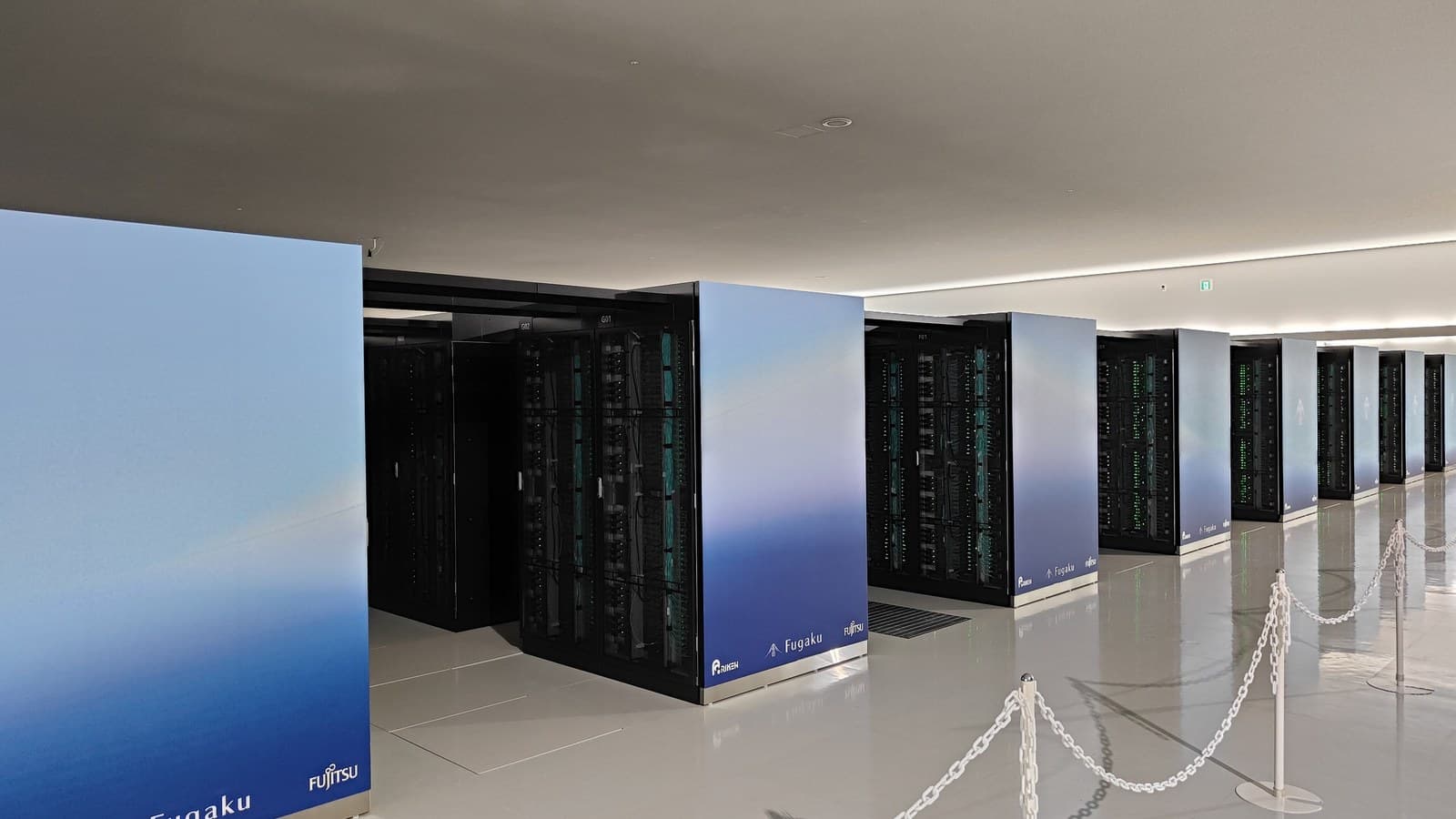
Fujitsu leans on its supercomputer history to make the case. The same in-house design team built the A64FX chip for the RIKEN Fugaku machine, which uses Arm's SVE extensions and led the Top500 ranking after its 2020 debut. The company says MONAKA inherits that lineage, along with mainframe-style reliability features. Development of the processor has been supported by Japan's NEDO Green Innovation Fund, under a programme aimed at next-generation green data centres.
The software story matters as much as the hardware. Building on Armv9 means MONAKA can run standard Linux distributions and the wider Arm toolchain without a bespoke port, which lowers the cost of trying it for organisations already running Arm in the cloud. Fujitsu says it has optimised compilers, libraries and AI frameworks for the chip, and it points to its long record of contributing upstream code for Fugaku and the A64FX. For a buyer weighing sovereignty, that compatibility is the difference between a procurement decision and a research project.
A successor is already on the roadmap. Fujitsu's public materials point to FUJITSU-MONAKA-X in 2029, a 1.4-nanometre part with an integrated NPU and matrix extensions, selected for the RIKEN FugakuNEXT supercomputer, which will pair it with Nvidia GPUs.
The competitive picture is crowded
Fujitsu is entering an Arm server CPU market that is no longer a novelty. Ampere has sold Arm chips to cloud providers for years, Amazon's Graviton designs underpin a large slice of AWS, and Nvidia's Grace CPU is the host brain of its own AI systems. Qualcomm has returned to the market with a data-centre design. Each of those has cloud-scale distribution or a GPU attach that Fujitsu does not.
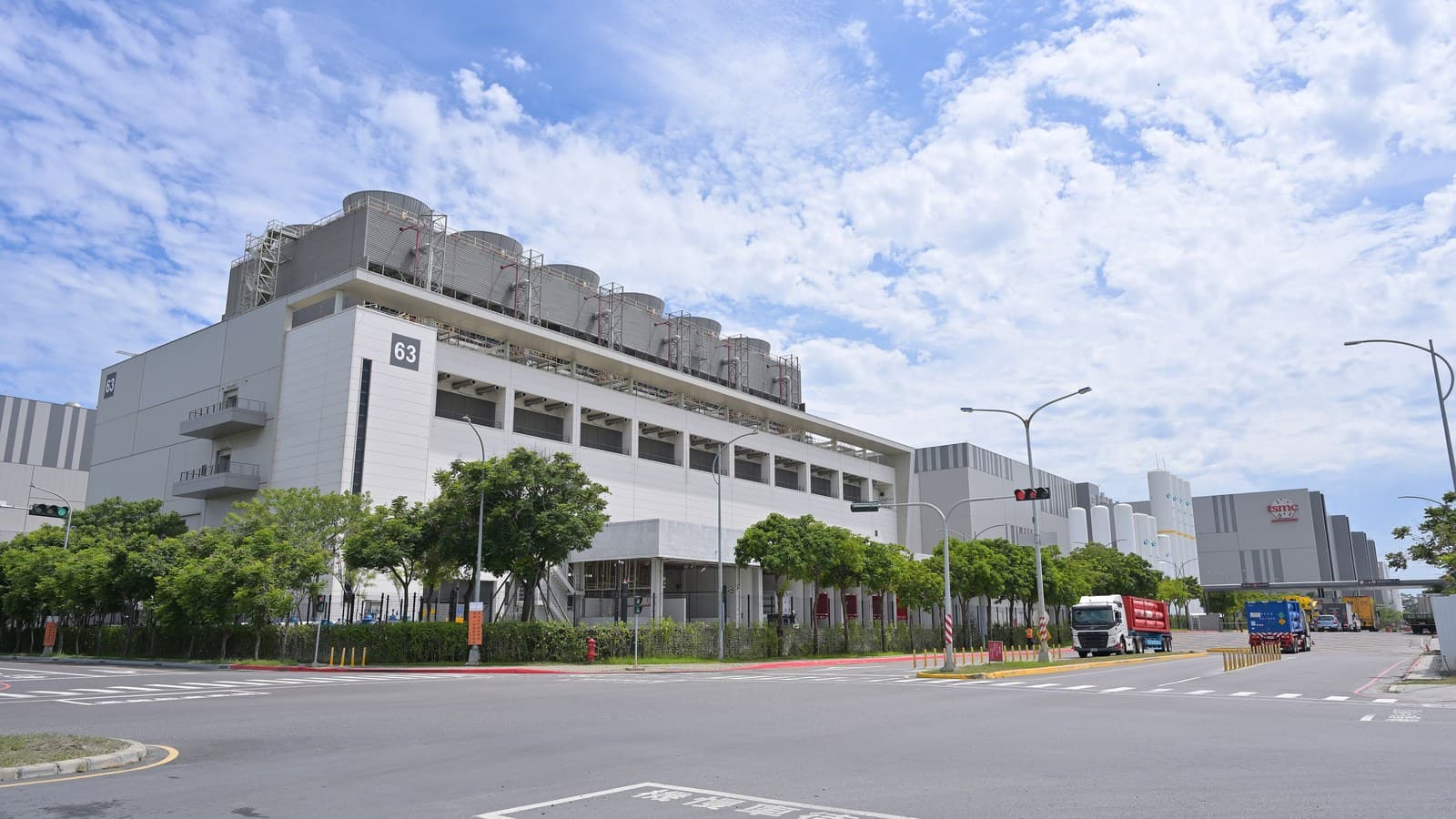
The 2nm label is also less of a differentiator than it sounds. The process is the current leading edge, and TSMC, Samsung and Intel are all racing to build it at volume. Fujitsu designs its chips but does not fabricate them at this node; press reports have tied the 2nm work to TSMC, while Fujitsu's leadership has also publicly backed the Japanese foundry Rapidus as a second source. For all the sovereign language, the leading-edge silicon still comes from a foreign or embryonic fab.
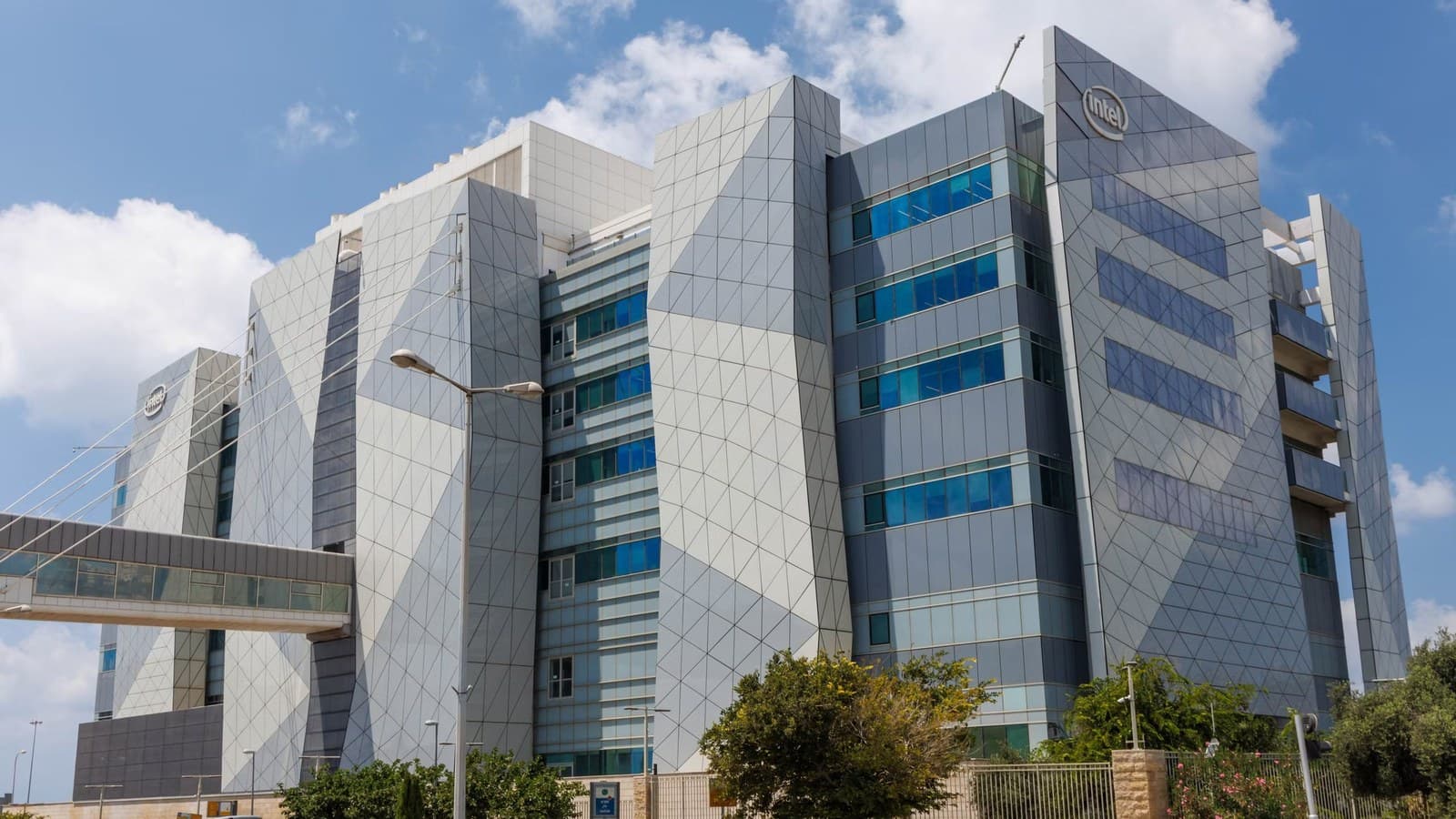
That is the same race the rest of the industry is running. Intel has bet its foundry strategy on its 18A node and on advanced packaging; TSMC is ramping its own 2nm family for the smartphone and data-centre customers that pay the bills; Samsung is chasing leading-edge DRAM and logic in parallel. Fujitsu's contribution is a design built to wring cost out of the node by using it sparingly, not a claim to own the process. Its bet is that a well-integrated part on a borrowed node can undercut rivals on total cost of ownership, helped by cooling and density figures that a larger but hotter design cannot match.
Power is where the argument is most testable, and where the market has moved. AI data centres are straining grids and water supplies, and operators increasingly buy on performance per watt rather than peak throughput. A server that runs without a chilling plant, and that promises a large cut in cooling energy, addresses the constraint that is slowing new builds. Whether that translates into orders depends on workloads, because a CPU that handles inference well may still lose on the large-scale training that dominates AI capital spending.
Sovereignty here is a claim about location and accountability, not about a fully domestic supply chain. Fujitsu's framing is narrower than the word suggests: keeping design, assembly and service under Japanese control, and offering buyers a stack they can inspect.
Caveats and what to watch
Every performance number in the announcement is Fujitsu's own. The claim of twice the AI inference throughput is measured against unnamed “other CPUs” and has not been reproduced by an independent lab. The cooling and density figures come from the vendor too. The 2026-to-2027 rollout is a schedule, not a shipment record, and product timelines in advanced silicon have slipped before. Comparable promises from Intel, AMD and Arm licensees have often arrived late, or with caveats about configuration.
There is a hint of a moving target in Fujitsu's own materials. The standing product page still describes a 2027 release, while the September 14 announcement pulls sales forward to November 2026. That may simply reflect a maturing programme, but it means the public record carries two dates.
For readers, three things are worth tracking. First, independent benchmarks on the 70-billion-parameter inference claim, since that is where a CPU-only pitch either works or does not. Second, customer wins. Fujitsu says financial, telecommunications and manufacturing buyers will get early access in the second half of fiscal 2026, and Europe is a target alongside Japan, so the first named deployments will show whether sovereign procurement converts into orders. Third, the foundry question. If MONAKA depends on TSMC's 2nm line, the sovereignty argument thins; if Rapidus or another Japanese source can build it later, the story changes.
Fujitsu has not published prices, and it has not said how many units it expects to sell. That number will decide whether MONAKA is a strategic statement or a business. For now, the clearest fact is the calendar: a chip first shown as a research ambition goes on sale in two months, and the company is betting that buyers who care most about where their compute comes from will pay for the option.
Cover image: “RIKEN R-CCS Fugaku” via Wikimedia Commons, CC0.
Tags

TPW Editorial
Editorial Team
TechPastWeek's editorial team reports and edits every story we publish. We research each piece against primary and credible secondary sources, and a human editor reviews and signs off before it goes live.