TikTok Settles With Alabama in the First State Deal Over Teen Safety
Alabama's $100 million settlement with TikTok lands days before the first state trial, and most of its terms mirror the framework Meta signed in August.

On this page
Key takeaways
- Alabama announced a settlement with TikTok and ByteDance on September 25, 2026, days before the first state trial over teen safety, under which TikTok will pay the state at least $100 million.
- The payment can rise to $300 million if 40 other state attorneys general sign comparable agreements with TikTok inside a set window, and the $100 million is due within 45 days.
- The terms require a two-hour daily limit for teens, 'productive pauses' after 15, 60 and 90 minutes of continuous use, and a block on access and notifications between midnight and 6 a.m.
- TikTok must also set teen accounts to private by default, ban cosmetic filters for teen users, strengthen age verification and content moderation, and take up to a year to put age verification in place.
- The measures largely mirror the framework Meta agreed to with a bipartisan group of state attorneys general in August 2026, part of a deal worth up to $17.1 billion.
On September 25, 2026, the state of Alabama announced a settlement with TikTok and its Chinese parent company ByteDance, resolving the state's claims that the platform endangered children and misled consumers about its safety. The deal landed days before the first state trial ever scheduled against TikTok on those issues, and it establishes terms that are unusually concrete for a settlement of this kind: a two-hour daily limit for teenagers, mandatory pauses, an overnight blackout, and a private-by-default setting on every teen account.
Related reading: Meta Ordered to Pay $25 Billion in New Mexico Privacy Case · Warsh Says the AI Investment Boom Is Adding to Inflation.
The headline number is the one states have been fighting for. TikTok will pay Alabama at least $100 million, which the BBC reported is due to the state within 45 days. The figure can reach $300 million if 40 other state attorneys general sign comparable agreements with the company inside a set window, according to both CNBC and the Alabama Attorney General's office. That multiplier is the mechanism doing the work. Alabama negotiated an option on the rest of the country, and a single additional state has a reason to take the same deal.
What Alabama actually won
The injunctive terms are longer and more specific than the payment.
- A two-hour daily time limit for teen users in Alabama, with the limit and usage blocks taking effect immediately according to the BBC.
- "Productive pauses" that interrupt continuous scrolling after 15, 60 and 90 minutes, described by The Hill as an attempt to break up endless scrolling.
- A nighttime restriction from 12:00 a.m. to 6:00 a.m., during which teens lose access and notifications are blocked, with similar restrictions applied during school hours.
- Teen accounts set to private by default.
- A blanket prohibition on cosmetic filters for teen users.
- Stronger age verification, stronger content moderation protocols and more user-friendly parental controls, with TikTok allowed up to a year to establish the age-verification measures.
The distinction between what starts now and what can wait matters. Time limits and usage blocks were due to take effect immediately. Age verification, the piece that would do the most work, has a year. Alabama's lawyers were described by DW as calling this very restrictive injunctive relief that requires TikTok to change many of the policies the state had identified as culprits.
The first trial avoided
Alabama sued in 2025, and the case was set to be the first time a state reached trial against TikTok on claims about adolescent wellbeing. That distinction was the point. Dozens of states have brought similar claims, and a jury verdict would have produced a ruling that applied to nobody else while binding everybody by precedent. A settlement converts that single case into a template, which is why the payment escalates only if other states sign on.
There is a useful comparison in the same litigation. New York's attorney general sued Meta in 2023 with 32 other states, and the case that produced the August 2026 settlement consolidated 51 of the actions in federal court in California. That campaign took three years to reach a negotiated document. Alabama filed in 2025 and settled in roughly a year, with a smaller target and a cheaper remedy, but the same theory of harm.
The specific claim Alabama made was about design rather than content. According to Reuters, the state argued that TikTok asks users to self-report their ages, yet allows people to view videos without creating an account, so the company can still collect data on their viewing habits. With no effective age restriction, features such as Kids Mode, which curates content for younger users, do very little. The complaint's framing is that the platform was designed to be addictive to young users, and that the company misled consumers about its safety.
That is an argument about the shape of a product rather than about anything a particular piece of content did. It is also why the remedy is a set of interface constraints: a limit, a pause, a window during which the product does not work. Both sides in the Alabama dispute were arguing about defaults.
TikTok's position was that it built the platform with teen safety as a key priority, and that Section 230 of the federal Communications Decency Act shields online platforms from liability over user-generated content. Reuters noted that neither side responded to requests for comment ahead of the trial, and that TikTok's US operations were transferred earlier in 2026 to an entity led by US investors and 20 percent owned by ByteDance, a change that shaped the litigation landscape but did not answer the claims.
The structural change in TikTok's US ownership is the background to this deal. The company now argues about a US-led entity's compliance record while a state attorney general still names ByteDance as a defendant, which is why the settlement binds both.
How the multiplier works
The structure of the Alabama payment is the part other states will be studying. One hundred million dollars is due in 45 days, unconditionally. The remaining two hundred million is conditional on 40 other attorneys general signing comparable agreements inside a specified window. Alabama is therefore paid twice over: once as the plaintiff that took the first risk, and again if its terms become the industry standard.
That is a different bargain from the one Meta signed, and the difference is instructive. Meta's settlement was large and unconditional in its first tranche, with $5 billion held back as a penalty triggered if other platforms came to the table. In Alabama the same instinct is inverted. The state is not extracting a payment for its own account, it is buying a price umbrella for a set of terms it wants replicated. A state that agrees later gets a cheaper deal than a state that waits, and a platform that refuses to replicate the terms pays more than it would have.
It also changes the negotiating balance for everyone else. Before this week, a second state faced a first state that had already extracted a settlement from TikTok, and the first state had leverage because it had gone first alone. Now the first state has offered to share. A latecomer can point at Alabama's terms and ask for the same ones, which converts a race to the courthouse into a queue at a counter.
The framework TikTok signed onto
The most consequential detail is how closely the Alabama terms track the framework Meta accepted a month earlier. In August 2026, Meta reached an agreement with a bipartisan group of state attorneys general that the New York Attorney General's office described as worth up to $17.1 billion, with at least $12.1 billion payable and a further $5 billion contingent on other major social media companies reaching similar settlements. Meta's own account of the agreement said most of the terms must remain in place for ten years and that its time-limit commitments, night mode features and school-hours usage limits were built to set a path for the whole industry. The District of Columbia Attorney General called it the largest state consumer protection settlement in history outside of the Big Tobacco settlements of the 1990s.
The BBC reported that many of the Alabama measures follow that framework. Two hours of daily use, night-time blocking and school-hours limits are the Meta package, arriving in TikTok's product a month later through a different state and a much smaller cheque.
That is the precedent this settlement sets, and it cuts in a direction worth watching. Meta's contingent $5 billion was structured to escalate if peers adopted comparable protections. Alabama's $200 million of headroom escalates if 40 more states sign. Both are the same wager: that the first company to agree pays for the standard, and that the standard is more valuable once everyone is inside it.
What the design remedies actually change
It is worth being precise about what a limit is, because the terms read like safety features and are closer than that to interface constraints.
A two-hour daily cap does not select safer content. It ends a session, which means it interrupts whatever the teenager was doing when the counter ran out, including a video they did not need to see. A productive pause at 15, 60 and 90 minutes is a friction device: it does not ask anything of the user, it just refuses to continue uninterrupted, and its purpose is described in the settlement as limiting endless scrolling. The overnight block and the school-hours block are the most concrete in the package, because they are the only terms tied to something other than elapsed minutes. A teenager who cannot reach the app at 1 a.m. is not scrolling at 1 a.m.
Set against that, the ban on cosmetic filters is a content-adjacent rule with a different character. It is the one term in the list aimed at a specific documented pressure rather than at duration, and it is the term most likely to be read as precedent for the next negotiation.
The parental-control and content-moderation commitments are the vaguest, because they do not specify a standard. Stronger moderation can mean more removals or fewer, and the settlement does not say which. A reader looking for a measurable standard will find one in the time limits and will not find one in the moderation language.
Every remedy in this settlement is a change to how the product behaves by default. None of them requires a parent to install anything, which is also why they apply to the teenagers who would never have configured parental controls themselves.
What is still missing
Three gaps sit inside the Alabama deal.
Age verification is the load-bearing element and it has a year-long runway. A time limit attached to an account whose age was self-reported by a thirteen-year-old is a time limit for whoever the system believed. Until verification is in place, the other measures apply to a population TikTok has not reliably identified.
The settlement binds one state. Every term in the agreement is written around users "in Alabama", and the overnight window, the school-hours block and the parental controls are all state-scoped. The multiplier offers an incentive for other states to copy it, but nothing obliges them, and the litigation in other states continues on its own timetable.
And the question behind both deals is unanswered. Neither agreement establishes that a two-hour limit changes adolescent mental-health outcomes. Both are settlements of claims about design, not findings about effect. Meta's ten-year term and Alabama's immediate limits are enforceable commitments about product behaviour, which is a different kind of remedy from evidence about outcomes.
The trial that Alabama avoided was the first test of whether a state can win this argument in front of a jury. Other states are still going to get the chance to try.
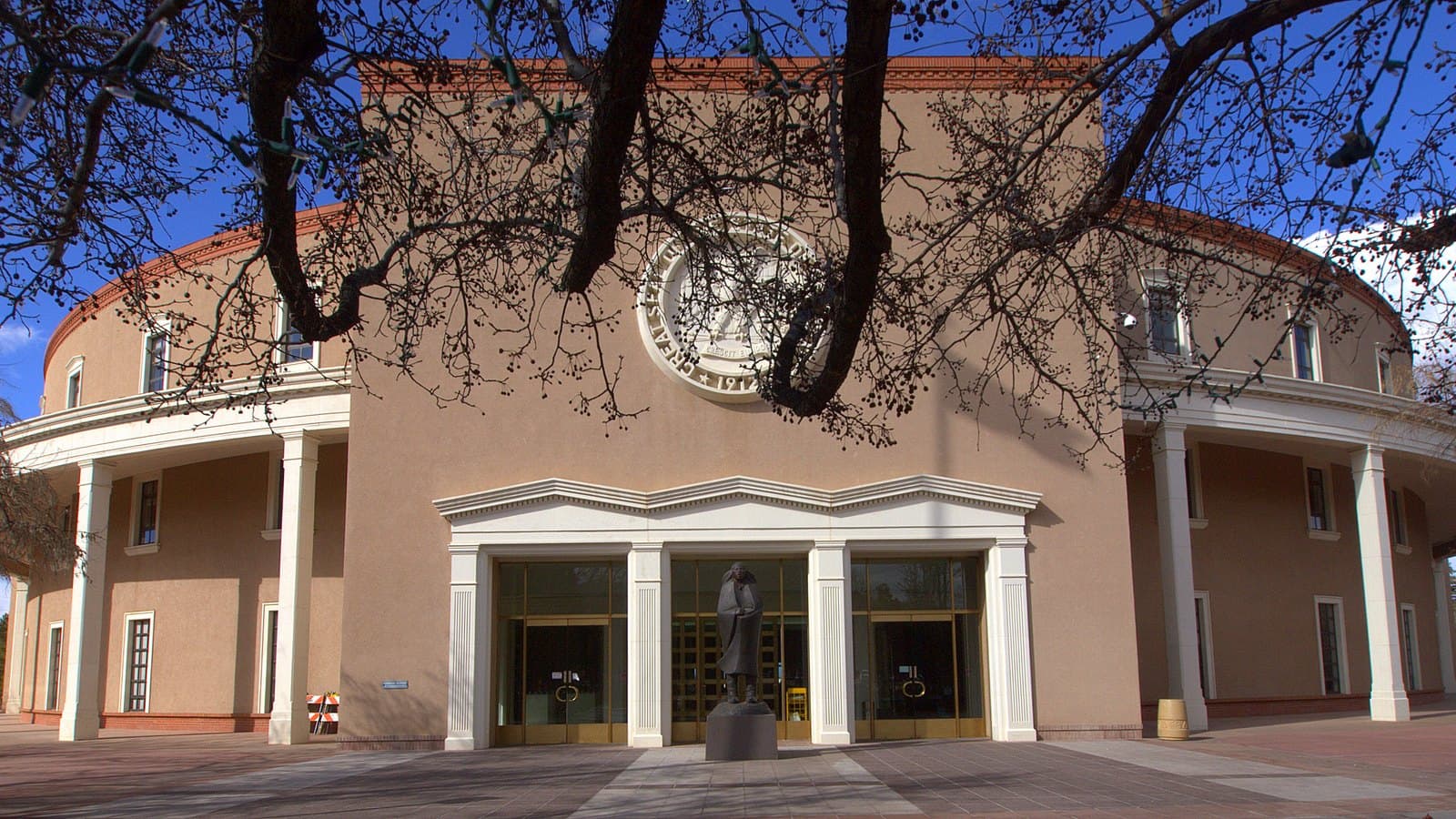
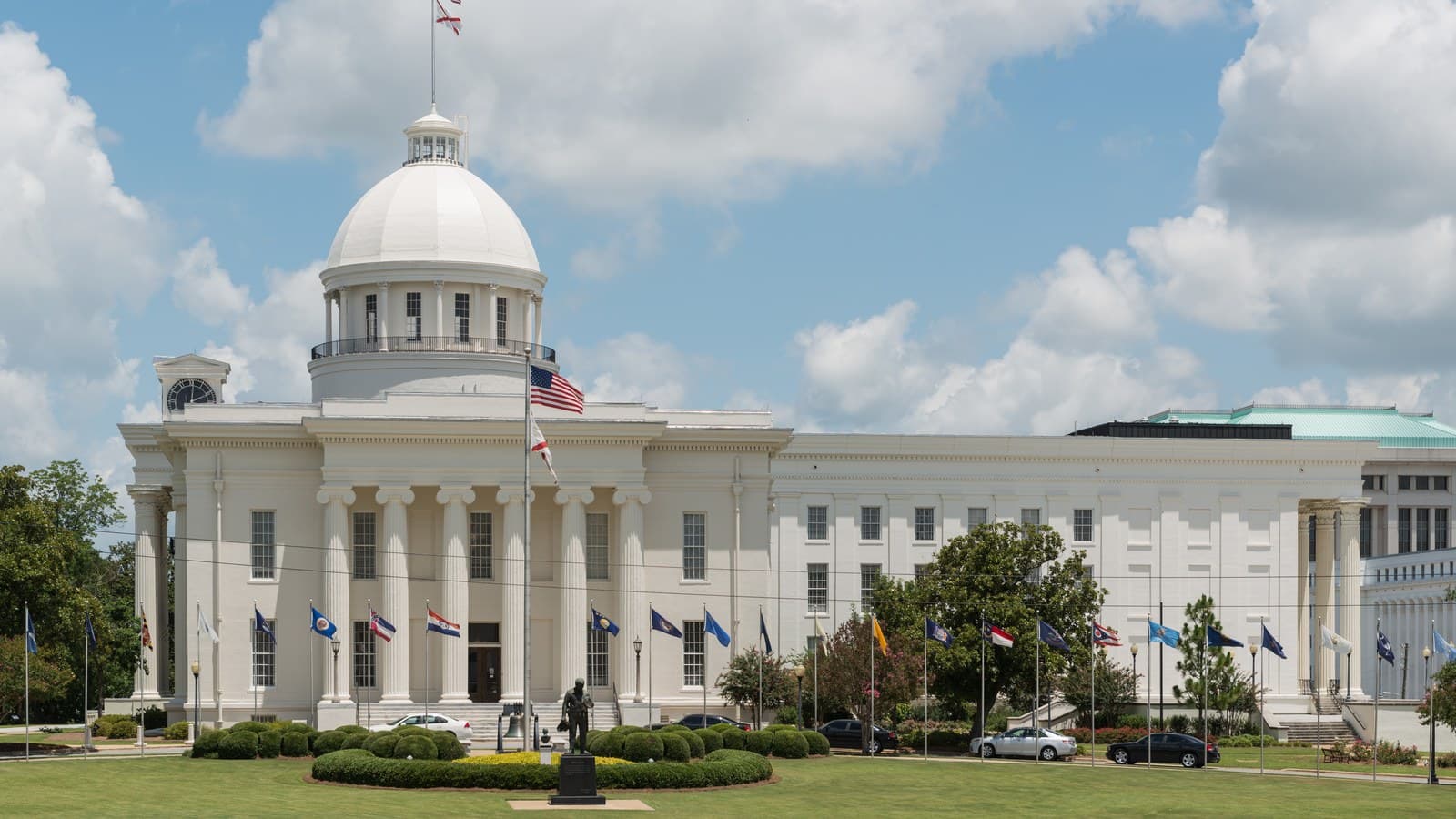
Cover photograph: the Alabama State Capitol in Montgomery, by DXR, licensed under CC BY-SA 4.0, via Wikimedia Commons.
Tags
Frequently asked questions
- How much is TikTok paying Alabama?
- TikTok will pay Alabama at least $100 million, due within 45 days. The amount can triple to $300 million if 40 other state attorneys general sign comparable agreements with the company inside a specified window, a structure designed to reward the deal spreading to other states.
- What safety changes must TikTok make in Alabama?
- Teens get a two-hour daily time limit, pauses after 15, 60 and 90 minutes of continuous scrolling, no access and no notifications between midnight and 6 a.m., similar limits during school hours, private-by-default accounts, and a ban on cosmetic filters. Stronger age verification and content moderation are also required, with up to a year allowed to build age verification.
- What did Alabama accuse TikTok of?
- Alabama sued in 2025 claiming TikTok and ByteDance designed the platform to be addictive to young users and misled consumers about its safety. The complaint argues that TikTok relies on self-reported ages, lets people watch without an account while still collecting viewing data, and as a result makes features such as Kids Mode ineffective.
- Is this the same as Meta's deal with state attorneys general?
- No, but it closely follows the same shape. Meta's August 2026 agreement, worth up to $17.1 billion with a bipartisan group of attorneys general, set time limits, night mode and school-hours restrictions that stay in place for a decade. The BBC reported that many of TikTok's Alabama terms follow that framework.

TPW Editorial
Editorial Team
TechPastWeek's editorial team reports and edits every story we publish. We research each piece against primary and credible secondary sources, and a human editor reviews and signs off before it goes live.