Grid-Scale Energy Storage, Explained: How the Grid Banks Power
How utilities store power at scale, lithium-ion, flow batteries, pumped hydro and thermal, plus the MW–MWh distinction and the economics that decide projects.

On this page
Electricity has an unusual constraint: supply and demand must match almost instantly, every second of every day. For a century, the grid met that constraint by building generators that could be turned up and down, and by keeping a fleet of them spinning just in case. Storage changes the terms of the problem. By moving electricity through time (soaking up power when it is cheap or surplus and releasing it when the system is tight) storage converts an instantaneous balancing act into an inventory decision.
Related reading: SK On Turns to Posco Future M for a Non-China LFP Supply Chain · CATL's TECTRANS II Aims to Make Electric Trucks a 1,000-Kilometer Business.
That is the promise. The reality is an engineering and finance discipline full of confusing units, competing technologies and sharp trade-offs. This is a plain-language guide to what grid-scale storage is, what it does, and what actually determines whether a project gets built.
The two numbers behind every project: MW and MWh
Storage gets described with a single word, "capacity," but it has two distinct ratings, and conflating them causes most of the confusion.
- Power (MW) is how fast energy can be moved, the size of the pipe. It sets how quickly a system can charge or discharge.
- Energy (MWh) is how much can be stored, the size of the tank. It sets how long the system can sustain that power.
Duration is simply energy divided by power. A system rated at 100 MW and 400 MWh is a "4-hour" battery: it can discharge at full power for four hours. The same 100 MW paired with 200 MWh is a 2-hour system. This is why battery costs are quoted so carefully, NREL's utility-scale battery benchmarks present capital cost per kilowatt-hour (which falls as duration grows, because the energy portion is shared over more hours) and per kilowatt (which rises with duration), and warn that a cost figure is meaningless without stating the duration.
It helps to group projects by duration class, because each class tends to serve different jobs:
Class            Typical role                          Discharge window
─────────────────────────────────────────────────────────────────────────
Short (≤1 h)     Frequency regulation, fast reserve     seconds–minutes
2-hour           Peaking capacity, energy arbitrage     ~2 h at rated MW
4-hour           Solar time-shift, capacity adequacy    ~4 h at rated MW
8-hour           Overnight renewable shifting           ~8 h at rated MW
Long (10 h+)     Multi-day and seasonal firming         ~10 h to days
─────────────────────────────────────────────────────────────────────────
Duration (h) = energy (MWh) ÷ power (MW)
The U.S. Department of Energy treats "long-duration" as systems that can discharge for ten hours or more, a threshold that matters because lithium-ion economics weaken as duration stretches and alternative technologies start to compete. Most grid batteries built today sit in the 2–4 hour band; the frontier is everything above it.
A menu of technologies, each with a niche
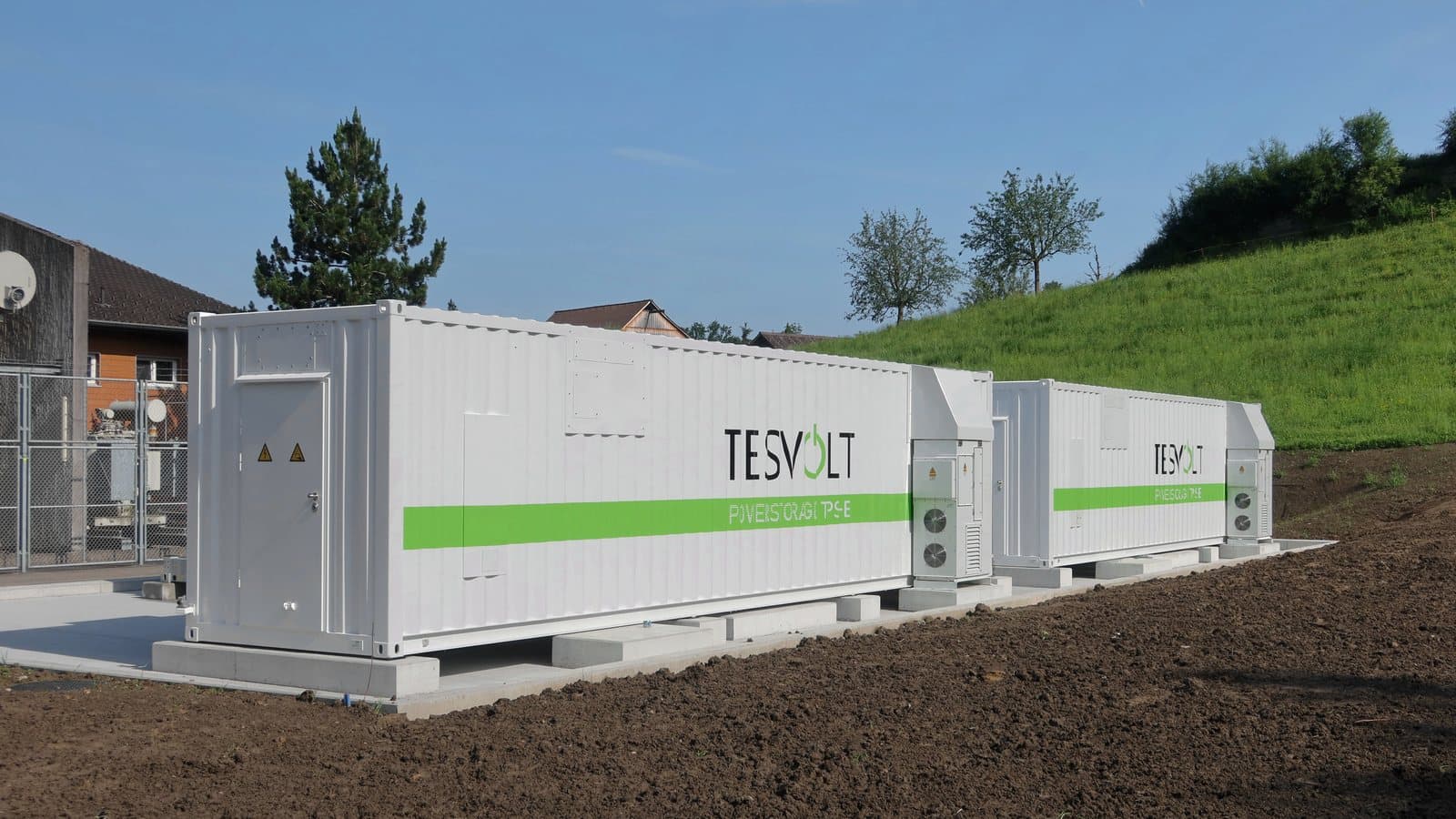
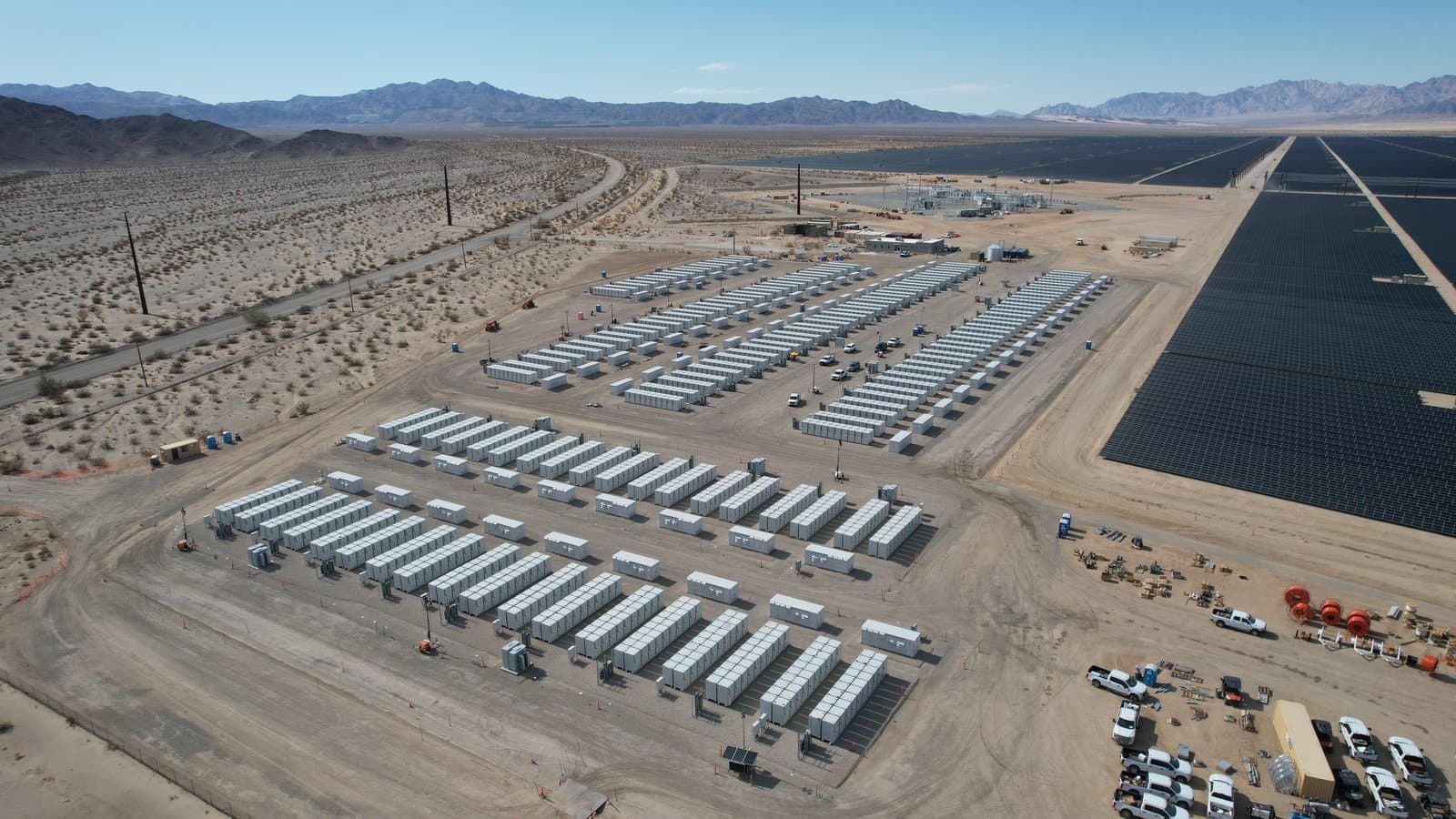
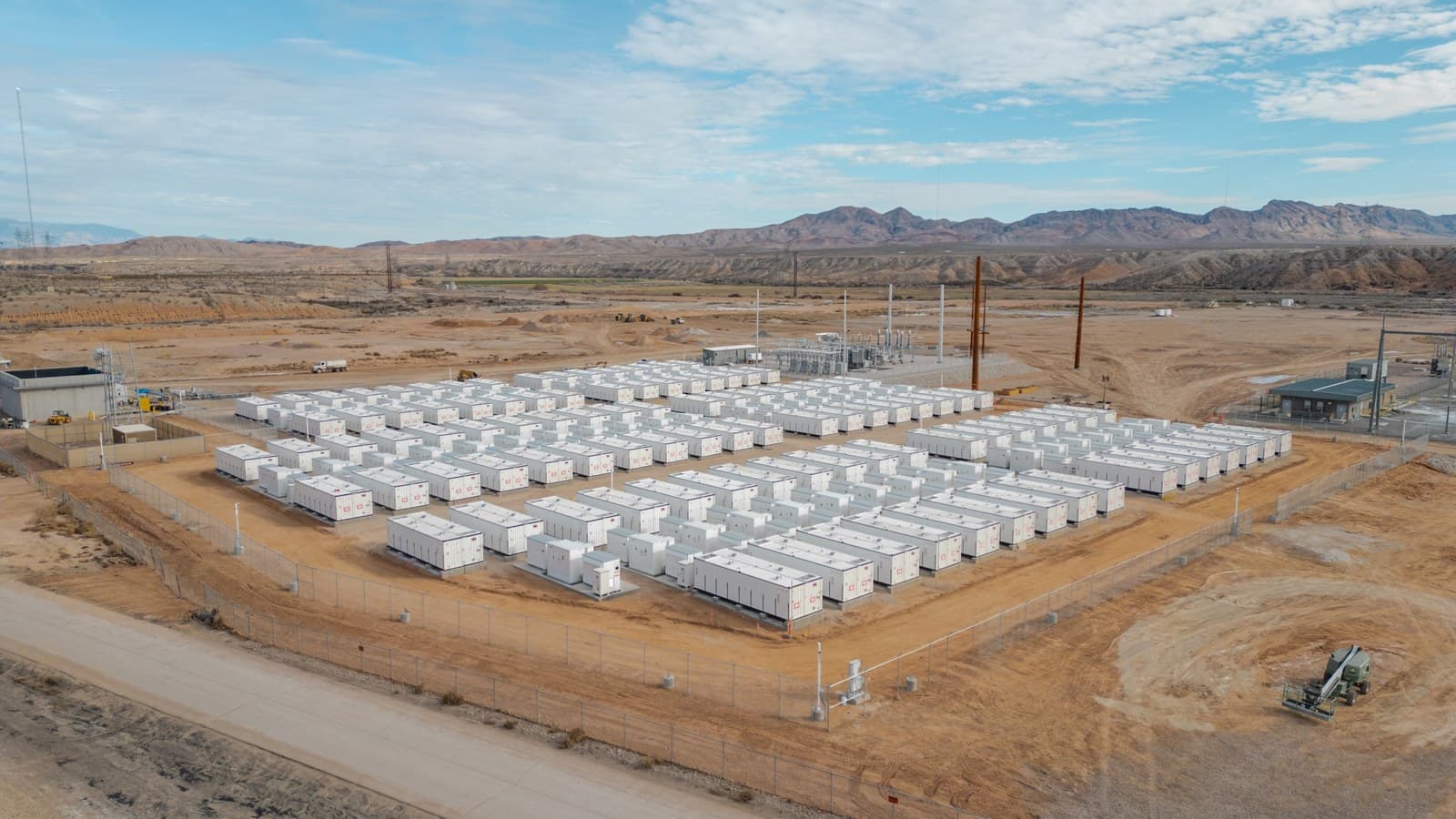
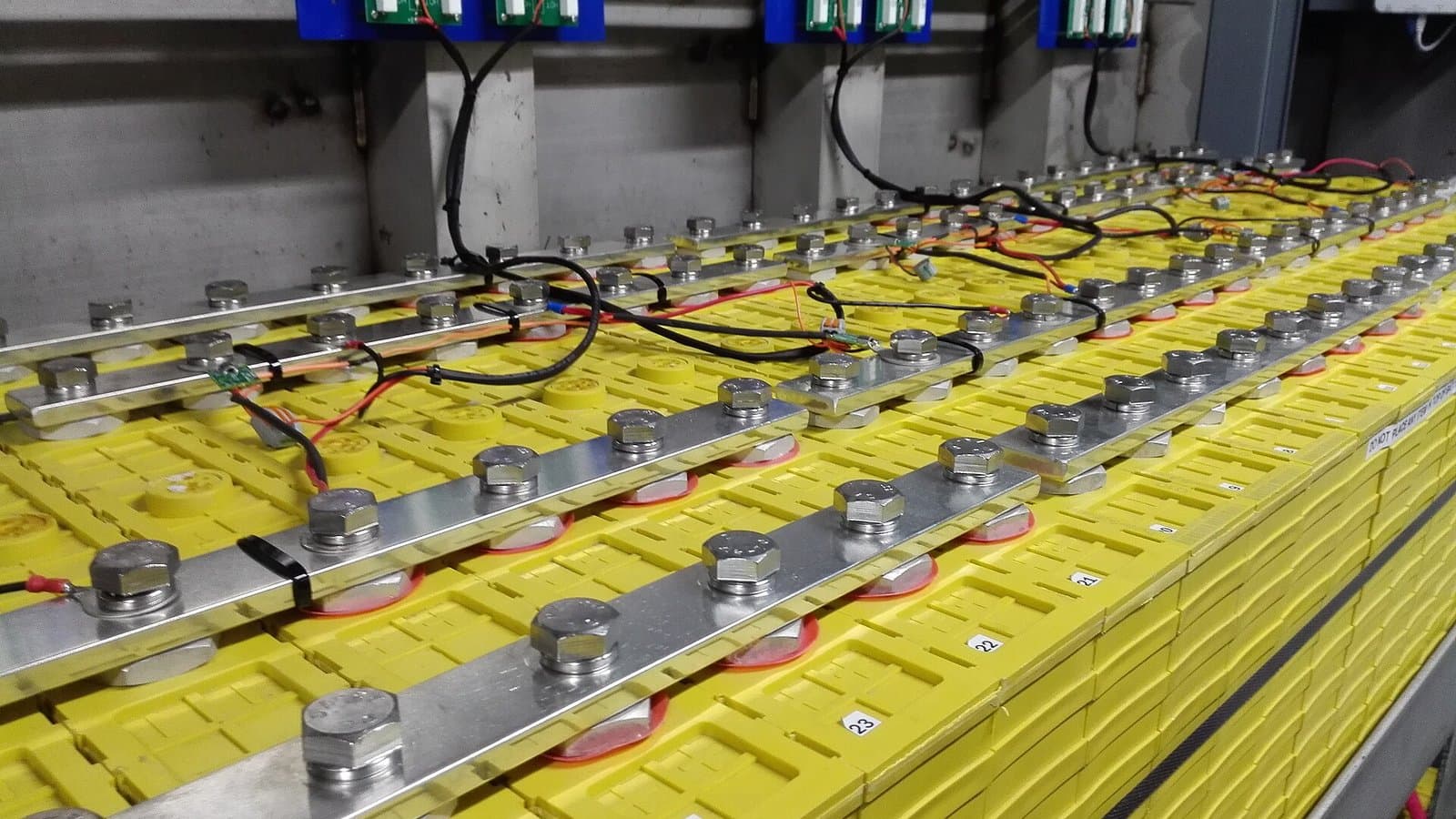
Lithium-ion BESS. The workhorse. A battery energy storage system (BESS) packs cells (overwhelmingly lithium iron phosphate (LFP) for stationary use now, rather than the nickel manganese cobalt (NMC) chemistry common in vehicles) into racks inside shipping-container-like enclosures, alongside power conversion equipment and thermal management. Lithium-ion won the first wave because it is modular, factory-built and fast to deploy. PNNL's cost and performance work found that a fully installed 100 MW, 10-hour lithium-ion LFP system was priced around $356/kWh, with the DC storage block alone accounting for a large share of the total.
Flow batteries. These store energy in liquid electrolytes held in external tanks, circulating them through a cell stack. The defining feature is that power and energy scale independently: want more hours, build bigger tanks; want more power, add stacks. Vanadium redox flow batteries use the same element on both sides, which limits cross-contamination, tolerate deep discharge, carry low fire risk because the electrolyte is aqueous, and offer very long cycle life, at the cost of a larger footprint and a higher upfront price. They are a natural fit for multi-hour and long-duration duty.
Pumped-storage hydropower (PSH). Still the world's largest form of grid storage by a wide margin. Two reservoirs at different elevations are linked by turbines and pumps; power is used to pump water uphill when electricity is cheap, and released downhill to generate when it is valuable. The International Hydropower Association puts installed PSH capacity at roughly 200 GW, and it accounts for the overwhelming majority of long-duration storage energy worldwide. PSH provides hours to days of storage and can run for decades, but it is geography-bound and slow to permit and build. DOE research has put its levelized cost in the range of $0.12–$0.14/kWh for large plants.
Thermal storage. Rather than storing electrons, thermal systems store heat (in molten salt, solid particles, concrete or phase-change materials) and convert it back to electricity through a heat engine. DOE's technology assessments describe a spectrum from mature two-tank molten-salt systems used with concentrating solar power to emerging moving-particle and packed-bed designs that could be sited almost anywhere, including at retired fossil plants. Round-trip efficiency is lower than batteries, but the storage medium itself is often cheap and long-lived.
It's not always about electricity
Some storage never becomes electricity again. Thermal storage for buildings and industry, and "one-way" chemical storage such as hydrogen, sit outside the battery comparison entirely. They matter because a large share of energy demand is heat, not power.
Inverters: the quiet difference between following and forming
Batteries and most renewables connect to the alternating-current grid through inverters, and the control strategy inside those inverters turns out to be one of the most consequential engineering questions in the transition.
A grid-following inverter acts like a current source. It reads the grid's voltage and frequency and injects power in step with them. This is how the vast majority of inverters work today, and it is efficient and well understood. But it depends on something else (traditionally a big spinning generator) to establish the grid's reference voltage and to provide the physical inertia that resists sudden frequency changes.
A grid-forming inverter acts more like a voltage source, maintaining its own internal voltage reference and responding almost instantly to disturbances. NREL's research roadmap on grid-forming inverters frames the shift bluntly: as inverter-based resources displace synchronous machines, grids lose inertia, and stability can degrade once inverter penetration gets high. Grid-forming controls are the proposed answer, and NERC has argued that new transmission-connected batteries should be built with grid-forming capability because the incremental cost is small relative to the system-stability benefit.
The practical payoff includes better behavior in weak grid areas, improved voltage and frequency support, and (in some configurations) black-start capability, the ability to energize a dead grid without an external power source. Retrofitting old inverters is generally hard, so the choice is often made for the life of the asset.
What storage actually sells
A battery earns money by being useful in more than one way, and operators stack revenue streams. FERC groups the ancillary services that keep a grid stable into a recognizable set, and storage can serve most of them.
- Energy arbitrage, charge when wholesale prices are low, discharge when they are high. The gross margin is the price spread minus round-trip losses.
- Frequency regulation, second-by-second adjustments that hold grid frequency steady. Batteries excel here because their power electronics can swing output direction in milliseconds.
- Peaking capacity, standing in for a gas "peaker" plant during the few hundred hours a year when demand is highest.
- Operating reserves, spinning and non-spinning capacity held ready to replace a lost generator, typically within ten minutes.
- Voltage support, injecting or absorbing reactive power to keep voltage within limits.
- Black start, restarting the grid after a blackout, a niche but high-value service.
Services pay per MW, but you still need MWh
Ancillary products are priced per megawatt of reserved capability, which rewards high-power designs. But symmetric regulation requires headroom in both directions, so a battery sitting at a high state of charge cannot sell its full symmetric capability. Sizing on power alone is a classic mistake.
The revenue mix shifts as markets mature. In several markets, frequency-response services dominated battery revenue early, then compressed sharply once enough batteries qualified to provide them. Arbitrage and capacity payments have generally taken over as the growth streams, a reminder that a business case built on a single early-market price is fragile.
The economics: LCOS, efficiency and degradation
The headline comparison metric is the levelized cost of storage (LCOS), the average price a unit of discharged energy would need to fetch to break even over a project's life. PNNL's methodology makes clear why LCOS is more honest than a sticker price: it folds in capital cost, fixed operations and maintenance, charging cost (including losses), financing, and the capital expenditures required for mid-life augmentation and replacement. Two systems with the same installed cost can have very different LCOS once lifetime and degradation are accounted for.
Round-trip efficiency is the share of energy put in that comes back out. Modern lithium-ion systems commonly land around 85–90% AC-to-AC once battery, power conversion, transformer and auxiliary losses are multiplied together, and that efficiency itself drifts down slightly as cells age and internal resistance rises.
Degradation and augmentation are where long-term value is won or lost. Lithium-ion cells lose capacity through both cycling and calendar aging, with heat and high state of charge accelerating the decline. Most utility-scale contracts do not promise nameplate energy forever; they promise a declining retention curve, often down to roughly 65–70% of beginning-of-life capacity, inside a defined operating envelope of cycles, depth of discharge, temperature and state of charge. To keep delivering a fixed number of MWh at the meter, an owner either oversizes at the start or adds "augmentation" capacity partway through the project life. Augmentation defers capital and exploits falling cell prices, but it demands reserved footprint, compatible hardware and careful warranty design.
Supply chains shadow all of this. The IEA's critical-minerals work finds that China accounts for around 80% of lithium-ion battery supply-chain manufacturing capacity and processes more than 70% of key minerals including lithium, cobalt, graphite and rare earths. Even LFP, which avoids cobalt and nickel, has concentrated chokepoints such as purified phosphoric acid. Price volatility and export restrictions have turned supply concentration from a theoretical risk into a planning constraint, and diversification efforts are skewed toward mining rather than the refining and manufacturing stages that matter most.
Fire safety and codes
Every electrochemical storage site is an industrial facility with a fire risk, and the codes have tightened accordingly. In the United States, the central installation standard is NFPA 855, which sets requirements for siting, separation distances, fire detection and suppression, explosion control, gas detection and emergency planning based on the technology, setting and size of the installation. The referenced test method is UL 9540A, which evaluates how thermal runaway propagates through a battery system, from cell to module to unit to full installation scale. Large-scale fire testing has become more demanding, the latest editions require it more broadly and add explicit deflagration evaluation, because a lithium-ion fire can produce flammable vent gas that ignites. Internationally, the International Fire Code plays a similar role, and local authorities frequently add their own requirements. Fire safety is one of the most active areas of change in the industry, and permitting timelines often hinge on it.
Storage, renewables, VPPs and the queue
Storage is the enabling partner for variable renewables, not a competitor. Solar and wind are cheap but not dispatchable; batteries and long-duration systems shift their output toward the evening peak, firm it, and provide the fast flexibility that a high-renewable grid needs. The IEA's analysis of battery storage notes that batteries are well suited to providing short-term flexibility for periods of roughly one to eight hours and that storage capacity must grow several-fold to support a tripling of renewable capacity. It also stresses that market rules must pay storage for the full value of the services it provides, not only energy.
At the small end, virtual power plants (VPPs) aggregate distributed assets (home batteries, smart thermostats, controllable EV charging, commercial loads) into something that behaves like a grid-scale resource. DOE's Pathways to Commercial Liftoff work estimates that deploying 80–160 GW of VPPs, enough to serve 10–20% of peak load, could meet load growth while reducing overall grid costs, and notes that North American VPP capacity has already grown to roughly 33 GW. The barriers are less technological than commercial: enrollment, standardized dispatch, and compensation that reflects the value delivered.
Then there is the bottleneck that applies to storage as much as to generation: interconnection. Before a project can connect to the transmission grid, it must go through study after study to determine what upgrades are needed and who pays. Berkeley Lab's Queued Up analysis found roughly 10,300 projects representing about 1,400 GW of generation and 890 GW of storage waiting in U.S. queues at the end of its latest survey period, that the typical project took about 55 months from request to commercial operation, and that only a small minority of projects ever get built. Storage faces the same logjam, and in some regions faces extra scrutiny over how a battery behaves during faults.
Caveats
A few honest qualifications. "Duration" is a design choice, not a fixed property: the same hardware can be dispatched differently, and nameplate energy is rarely all usable because of state-of-charge reserves, conversion losses and degradation. Comparisons between technologies are sensitive to assumptions, a point estimate for pumped hydro is not the cost of the next project. Ancillary-service markets are small and saturate quickly, so historical revenue is a poor guide to future revenue. And long-duration claims deserve scrutiny: a technology that is cheap per kWh but expensive per kW may still be uneconomic for a grid that needs both.
What to watch
The interesting questions are shifting from "can batteries balance a grid?" to "which technology wins at which duration, and who pays?" Watch three things in particular. First, whether grid-forming inverter requirements move from recommendation to standard practice, because that determines how much storage a grid can absorb before stability becomes the binding constraint. Second, whether long-duration technologies (flow batteries, advanced pumped hydro, thermal and compressed-air systems) cross the cost threshold where they beat over-built lithium-ion for multi-day shifting. Third, whether interconnection reform and VPP market rules actually shorten the path from project to power, because the cheapest storage in the world does nothing while it sits in a queue.
The one-line version
Grid-scale storage is a two-number business (power and energy) wrapped in an inverter problem, a degradation problem and a market-design problem. Duration classes are just the labels we use to talk about which of those problems dominates.
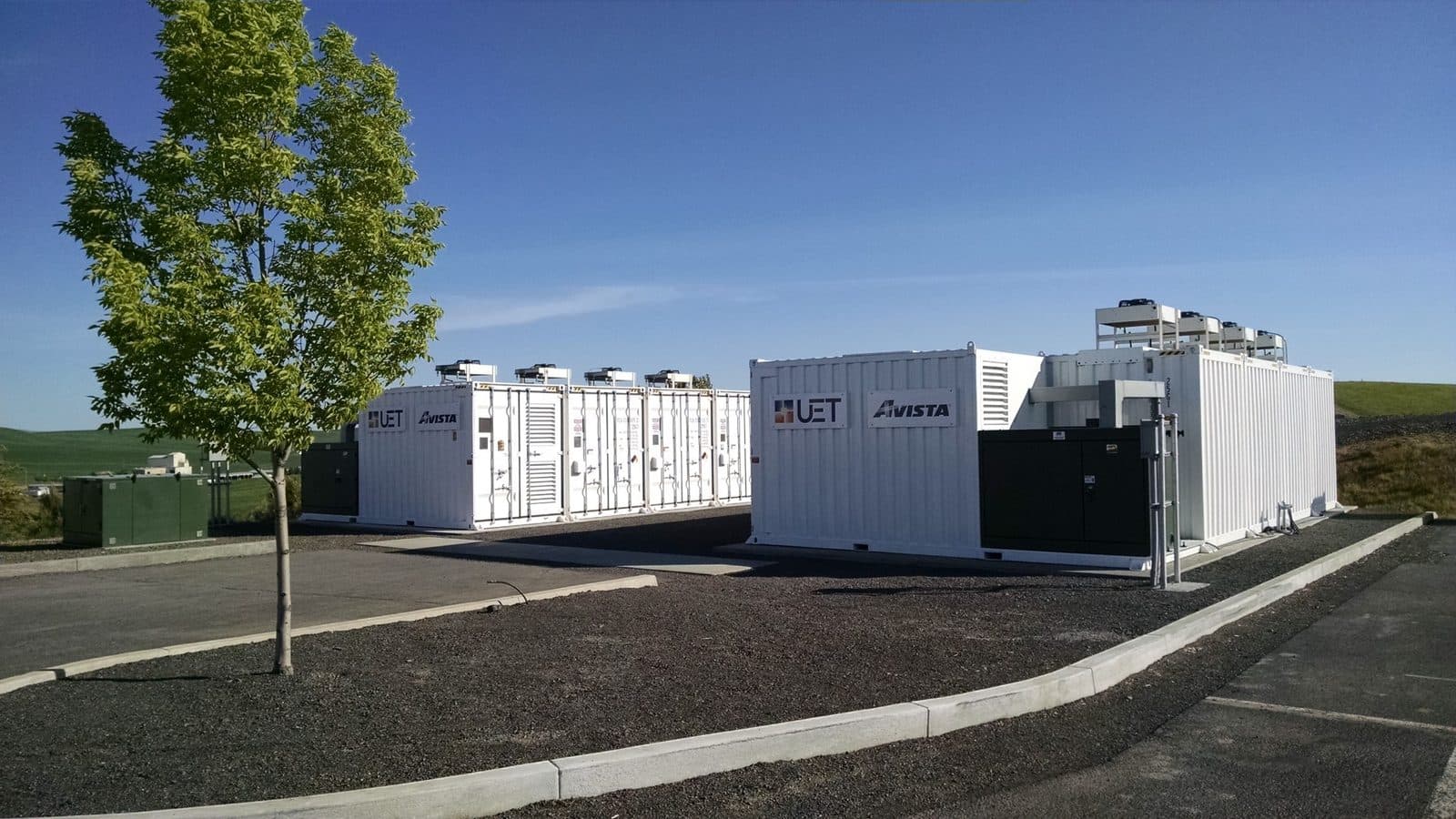
Cover image: a 1 MW / 4 MWh containerized vanadium flow battery at the Schweitzer Engineering Laboratories campus in Pullman, Washington, owned by Avista Utilities and manufactured by UniEnergy Technologies; photographed by UniEnergy Technologies via Wikimedia Commons, licensed under CC BY-SA 4.0, cropped to 16:9.
Tags

TPW Editorial
Editorial Team
TechPastWeek's editorial team reports and edits every story we publish. We research each piece against primary and credible secondary sources, and a human editor reviews and signs off before it goes live.