Australia's First Grid-Connected Sodium-Sulfur Battery Starts Up in Brisbane as Its Maker Winds Down
Lava Blue has commissioned Australia's first grid-connected sodium-sulfur battery in Brisbane: 250 kW, 1.45 MWh and about six hours, built by NGK as NGK exits.

On this page
On September 9, Lava Blue switched on Australia's first grid-connected, industrial-scale sodium-sulfur battery at its Centre for Predictive Research into Specialty Materials (PRiSM) in Brisbane's south-east. The 250 kW / 1.45 MWh unit, manufactured by Japan's NGK, is tied into the Energex distribution network and the National Electricity Market. Paired with 200 kW of existing solar, it can cover up to 100% of the facility's peak operating load, including the energy-intensive equipment Lava Blue uses to refine high-purity materials.
Related reading: SK On Turns to Posco Future M for a Non-China LFP Supply Chain · LG Energy Solution Opens a 35 GWh LFP Plant in Michigan, Betting on Grid Storage.
The commissioning is a national first, first reported by RenewEconomy and confirmed by Energy-Storage.news. It also lands in an unusually awkward stretch for the technology, because the company that built the battery has stopped taking orders for it.
What was switched on
- Capacity and duration: 250 kW of power and 1.45 MWh of energy, or roughly six hours of discharge at rated output.
- Maker: NGK Insulators of Japan, whose NAS line was the first megawatt-class sodium-sulfur product to be commercialised.
- Site: Lava Blue's PRiSM demonstration plant at Redlands, an advanced-materials facility built to move laboratory processes toward industrial scale.
- Grid: the Energex distribution network, and through it the National Electricity Market.
- Solar pairing: the pre-existing 200 kW array. Together the two can supply up to 100% of the site's peak load.
- Project delivery: the Queensland Energy Storage Technology (QUEST) Hub, a QUT and Queensland government initiative, with Melbourne's Allset Energy providing electrical engineering and integration.
The purpose-built power-management interface connecting the battery, the solar array and the grid incorporates more than 80% Australian content, including DC converters developed and manufactured in Queensland by Advanced Converter Solutions. PRiSM's main product is high-purity alumina, a material used in LEDs and as a coating inside lithium-ion cells, and its processing steps run hot and draw heavily on electricity. That is what makes the site a plausible test bed: six hours of storage can be pointed at a factory's most expensive hours of the day.
A battery that runs hot
NGK's cells keep a sodium anode and a sulfur cathode separated by a fine ceramic solid electrolyte. The membrane, a beta-alumina material, lets sodium ions pass while keeping the two liquid electrodes apart. Discharging drives sodium across to react with sulfur; charging regenerates the metal and the sulfur. Both materials must stay molten, so the battery is held at a few hundred degrees Celsius inside a 20-foot container.
That is the chemistry's defining trade-off. It consumes some energy on standby to stay hot, and in return it tolerates ambient conditions that would tax a conventional lithium pack. NGK describes NAS systems as suited to peak shaving, load balancing and smoothing renewable output, with a calendar life of about 20 years. NGK's installed base spans more than 250 sites worldwide and roughly 5 GWh over about two decades.
The irony in Brisbane is what the battery is smoothing: a plant that makes an ingredient for the lithium-ion chemistry that pushed its supplier out of the market.
Why non-lithium, long-duration storage is being tested now
Lithium-ion dominates grid storage because it is modular, factory-built and cheap to deploy in volume. Its typical sweet spot is two to four hours. Beyond that, the economics weaken, because an operator keeps paying for the energy half of the system while cycling it less often per day. Long-duration alternatives are aimed squarely at that gap.
Australia has become a test market for the idea. New South Wales has set eight-hour expectations for long-duration storage procurement, and Victoria has been building out its own framework. The Long Duration Energy Storage Council brought its first Australia roadshow to Melbourne, Canberra and Sydney in July 2026, meeting agencies including DCCEEW, ARENA and the Australian Energy Market Commission. Wood Mackenzie estimates global long-duration storage installations exceeded 15 GWh in 2025, up 49% year on year, from a small base.
Heat tolerance is one reason NAS keeps appearing in these trials. The Australian Renewable Energy Agency backed an earlier combination of sodium-sulfur and zinc-bromine storage in a Western Australian microgrid, noting that the technology's ability to shrug off extreme heat could suit regional networks where lithium-ion and pumped hydro do not always fit. The Queensland government committed A$15 million to establish the QUEST Hub, which spans flow batteries, advanced lithium-ion and power conversion as well as NAS.
The PRiSM project is deliberately small. Its job is not to prove that sodium-sulfur can be built, since NGK has been building it since the 1980s. It is to collect operating data from a grid-connected industrial site, where variable processing loads and solar output interact with real network requirements.
The caveat: the supplier has already voted to stop
A shrinking supplier base
NGK will not build new NAS batteries. The company has said it will keep supplying maintenance parts for units already delivered or on order, which is what protects the PRiSM installation. It does not protect the next project.
NGK's board resolved on October 31, 2025, to discontinue manufacturing and sales activities for NAS batteries and to stop accepting new orders, according to the company's discontinuation notice. The last shipment is scheduled for January 2027. NGK expects restructuring costs of about ¥18 billion, roughly US$117 million, to be booked as an extraordinary loss in the financial year ending March 2026.
The company had been working with BASF since 2019 on performance, cost reduction and global sales, and the two had explored expanding supply capacity with additional partners. Those talks were discontinued in September 2025. NGK cited rising material costs, intensifying competition with lithium-ion and slow demand for the very applications where NAS had an edge.
"It is expected to take time for stable and continuous demand to emerge for long-duration, large-capacity energy storage, where NAS batteries have distinct advantages." — NGK statement
That is the honest frame for the Brisbane commissioning. The machine is real, connected and running. The product line behind it is winding down. For Lava Blue and QUT, the value is in the data. For the wider industry, the lesson is about timing: a technology can be technically sound and still lose a commercial race to a chemistry that improves faster and scales more cheaply.
The next project shows the tension directly. QUT and Allset Energy want to install a 1.5 MW sodium-sulfur system with at least six hours of storage at Swanbank, a former coal site near Ipswich that is being redeveloped as a clean energy hub. That remains a feasibility study rather than a build, and it may not use NGK hardware at all. Finding cells could require a different supplier or a licence to manufacture locally, an option QUT has previously floated.
Scale: a demonstration beside an industry
The same week the PRiSM battery came online, a much larger lithium-ion project cleared a regulatory hurdle about 20 kilometres away. ZEBRE, a joint venture between Taiwan's HD Renewable Energy and Australia's ZEN Energy, received a referral decision under the federal Environment Protection and Biodiversity Conservation Act for its 180 MW / 360 MWh Noblevale battery at Swanbank. The two-hour project is proposed for a repurposed mining site and would connect to the Blackstone substation, with its layout arranged to avoid mapped koala habitat.
The comparison is stark. Noblevale is 180 MW and 360 MWh. The proposed Swanbank sodium-sulfur system is 1.5 MW and roughly nine MWh. On the same patch of ground, CleanCo Queensland's 250 MW / 500 MWh lithium-ion battery, built from Tesla Megapacks on a decommissioned coal station, reached full output in February 2026. The entire global NAS fleet amounts to about 5 GWh across more than 250 sites, a figure gathered over two decades.
None of that makes the small battery pointless. Duration is the variable that the bigger lithium projects do not test. Two-hour systems move solar generation into the evening peak. Six-hour systems can shift it further, and for an industrial load that runs through the night, the difference in value can be material. The question the PRiSM trial is meant to answer is empirical: how often does the extra duration earn its keep under Australian conditions?
Cover image note
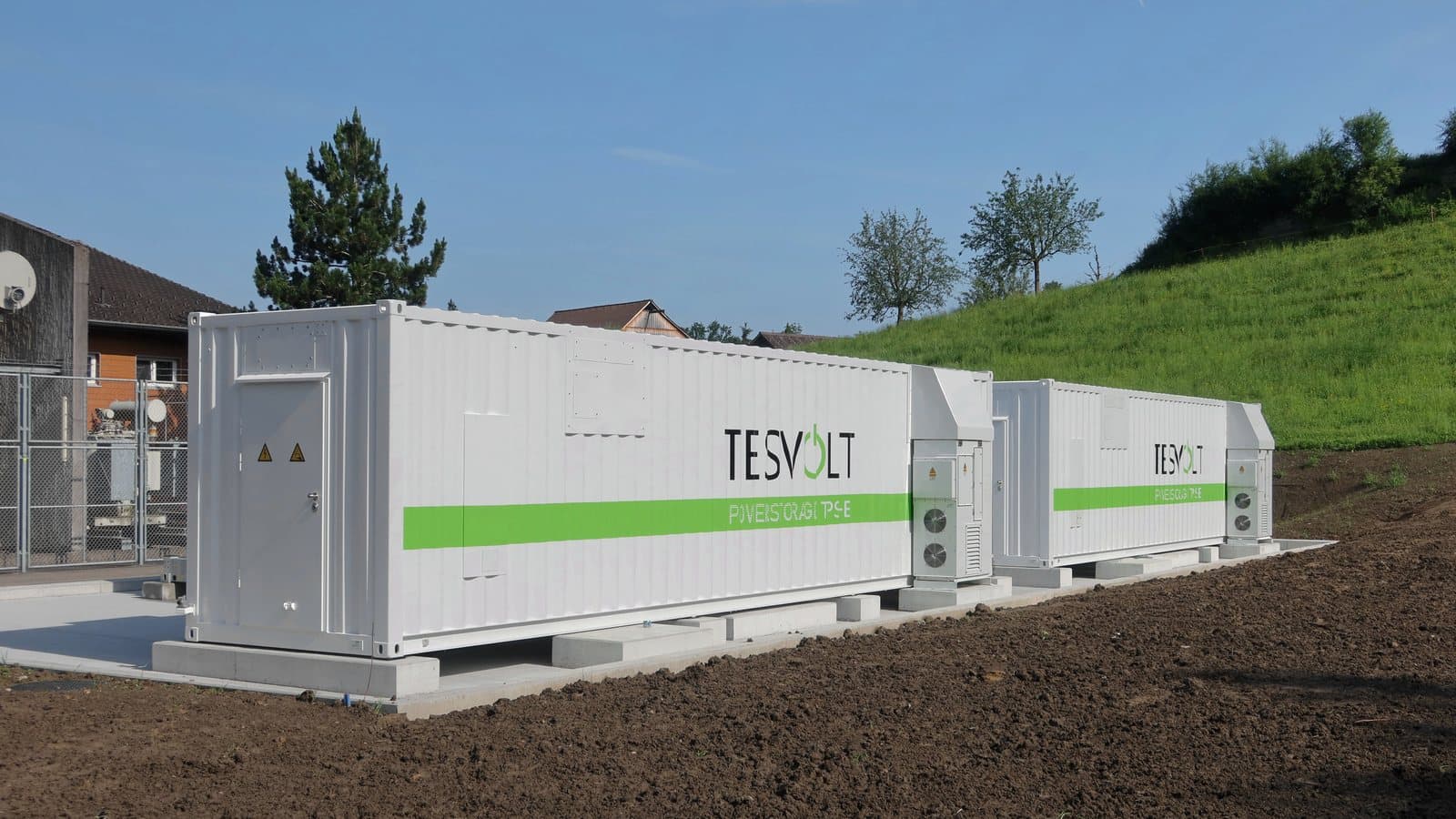
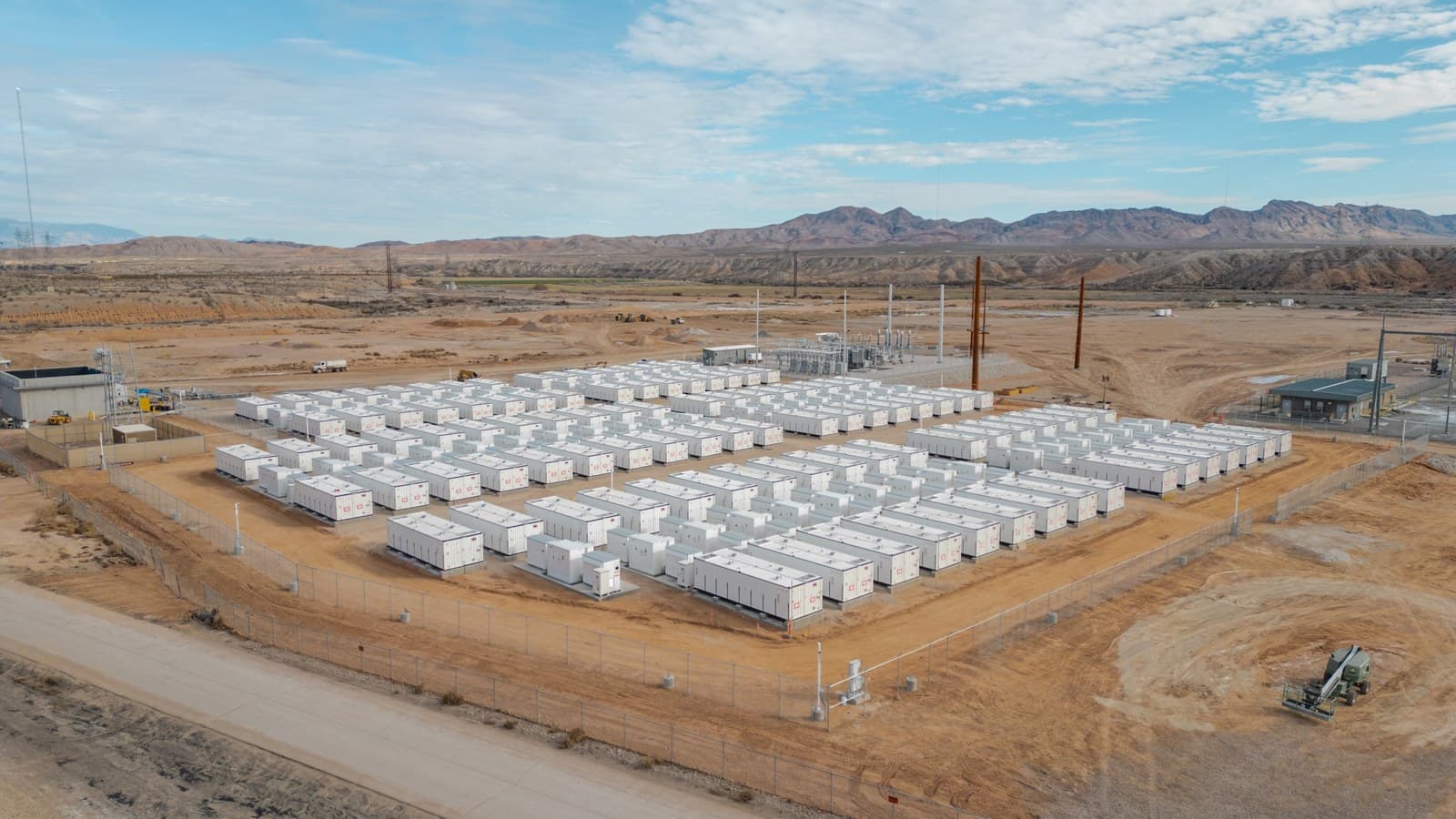
The cover photograph shows a representative utility-scale battery storage site, not the Lava Blue installation in Brisbane.
What the site is meant to prove
QUEST Hub director and QUT associate professor Joshua Watts framed the commissioning as a step from theory into an operating environment. "The project has brought together researchers, industry and government to demonstrate an alternative long-duration energy storage technology under real industrial operating conditions," he said. He added that the work demonstrated how long-duration storage can be integrated with renewable generation to reduce the energy costs of refining high-purity materials.
Lava Blue managing director Michael McCann tied the battery to a wider argument about supply chains. "The transition to renewable energy is also a materials transition. It requires both new energy technologies and new ways of producing the high-purity materials those technologies depend on," he said. "This project brings those two sides of the challenge together at one site."
Whether that argument outlasts NGK's exit is the open question. The hardware now running outside Brisbane may be among the last new NAS units ever commissioned, and its 20-year design life means it will likely still be operating long after the factory that made it has moved on. What the trial produces in the meantime, in performance data and integration know-how, is the part that could transfer to whatever long-duration chemistry comes next.
Cover: Desert Sunlight Battery Energy Storage System by BLM California (public domain) via Wikimedia Commons. The photo shows a representative utility-scale battery storage site, not the Lava Blue installation.
Tags

TPW Editorial
Editorial Team
TechPastWeek's editorial team reports and edits every story we publish. We research each piece against primary and credible secondary sources, and a human editor reviews and signs off before it goes live.