Panasonic's New Solid-State Battery Runs at 150°C, and It's Not for EVs
Panasonic Energy raised its solid-state cell's operating ceiling to 150°C and added a prismatic format, targeting factory machines, sensors and robots before electric cars.

On this page
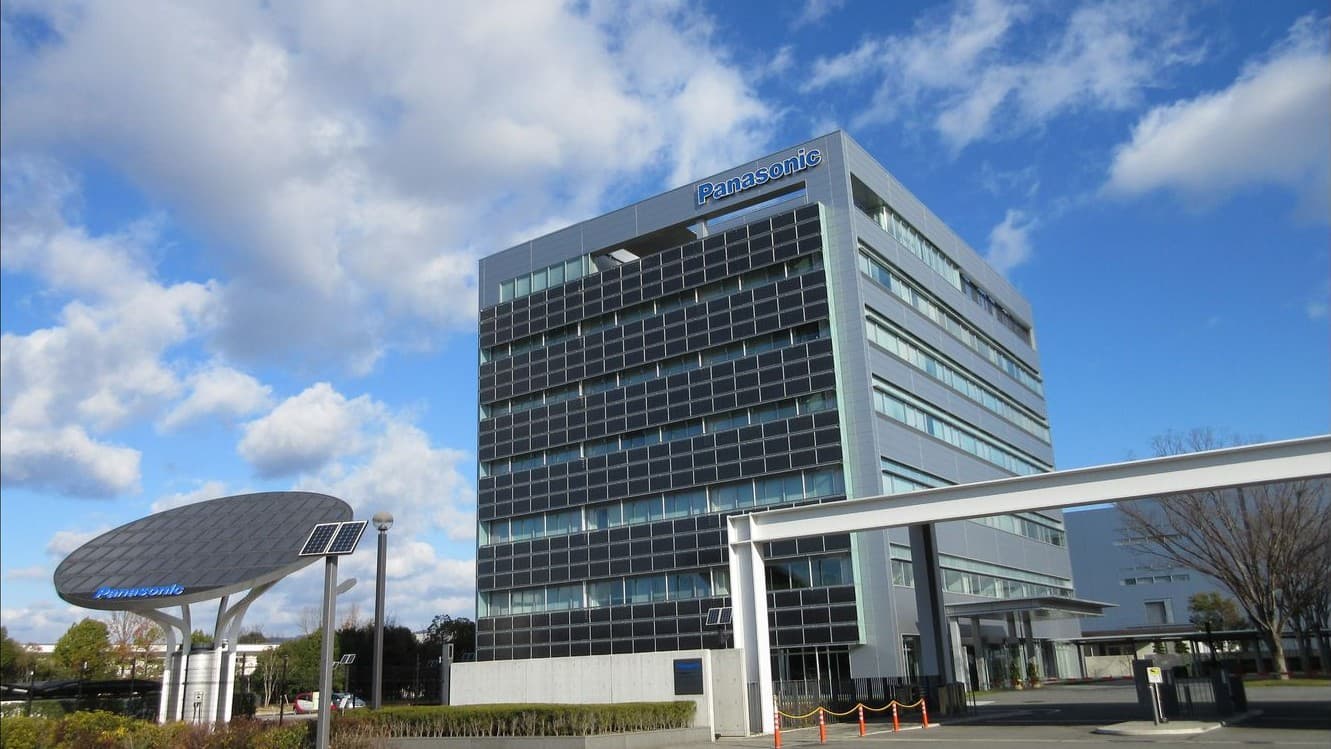
Panasonic Energy has developed a solid-state battery that can operate at temperatures of up to 150°C (302°F), raising the ceiling from 125°C and adding a new small-format prismatic cell design. Chief Technology Officer Shoichiro Watanabe announced the development at an industry conference in Chiba, Japan, on September 9, and said sample shipments of both the new prismatic cell and an upgraded coin-shaped version will begin between October and December 2026.
Related reading: CATL's TECTRANS II Aims to Make Electric Trucks a 1,000-Kilometer Business · Grid-Scale Energy Storage, Explained: How the Grid Banks Power.
The first customers won't be carmakers.
Panasonic is deliberately steering its solid-state technology toward industrial machinery and vehicle sensors rather than electric vehicles. Higher heat tolerance broadens the possible uses well beyond today's applications (tire-pressure monitoring sensors and sensors for industrial robots) into areas such as sterilizing medical equipment, where cells must survive conditions that would destroy a conventional lithium-ion pack. The prismatic design also offers more layout flexibility than the coin-shaped cells Panasonic has used previously.
"The higher the temperature, the more usability there is," Watanabe said, according to coverage of the briefing. Mass production is targeted to begin one to two years after sample shipments.
Why industrial first makes sense
Solid-state cells are prized for energy density and safety, but they remain expensive and hard to manufacture at automotive scale. Proving them in industrial and sensor applications (where volumes are lower, margins higher, and extreme conditions are the point) is a way to build manufacturing experience without betting the EV transition on a chemistry that is still maturing.
The robot angle
Panasonic Energy also said it will accelerate development of cylindrical batteries for humanoid robots, citing their fit for confined, rounded spaces. That is a telling signal of where the company sees near-term demand: not primarily in cars, but in machines, sensors, industrial equipment and a new generation of robots that need compact, solid power.
The EV timeline remains the long game. Panasonic's solid-state work has long been associated with the prospect of lighter, faster-charging battery packs, but the company is not positioning this cell as an EV product yet. That caution is shared across the industry. This same week, Mercedes-backed ProLogium said its Gen 3.5 all-solid-state cells had entered mass production at a gigafactory in Taiwan, citing third-party tests of 381 Wh/kg and 903 Wh/L; China's Dongfeng said it will unveil a solid-liquid hybrid battery, rated at 350 Wh/kg, in October for installation in mass-produced vehicles in the fourth quarter. Each is taking a different route to the same destination.
Why it matters
Solid-state batteries have spent years as a promise just over the horizon. The most credible near-term deployments are increasingly showing up in non-automotive niches, precisely because a cell that tolerates 150°C or fits inside a robot's arm does not have to compete on the cost-per-kilowatt-hour terms that rule the car market.
That does not make the technology less important for climate goals. Battery know-how accumulated in industrial and robotics applications tends to feed back into the automotive supply chain: better cells, cheaper cells, and manufacturing lines that have already learned to produce them at scale.
For now, Panasonic's message is one of sequencing. It is not claiming to have solved the EV battery. It is claiming to have found the first markets where solid state's advantages (heat tolerance, safety, compact size) are worth paying for today.
What to watch
The sample shipments in the fourth quarter, and whether customers are named. Sensors and industrial equipment are a quiet market, but a first paying customer is the strongest evidence yet that solid state has left the lab.
Tags

TPW Editorial
Editorial Team
TechPastWeek's editorial team reports and edits every story we publish. We research each piece against primary and credible secondary sources, and a human editor reviews and signs off before it goes live.