ISRO's GSLV-F17 Lifts EOS-05, India's First Geosynchronous Imaging Satellite
ISRO's GSLV-F17 placed the 2,367-kilogram EOS-05 into a transfer orbit on September 4, ending an eight-month launch drought and giving India a persistent eye in the sky.

On this page
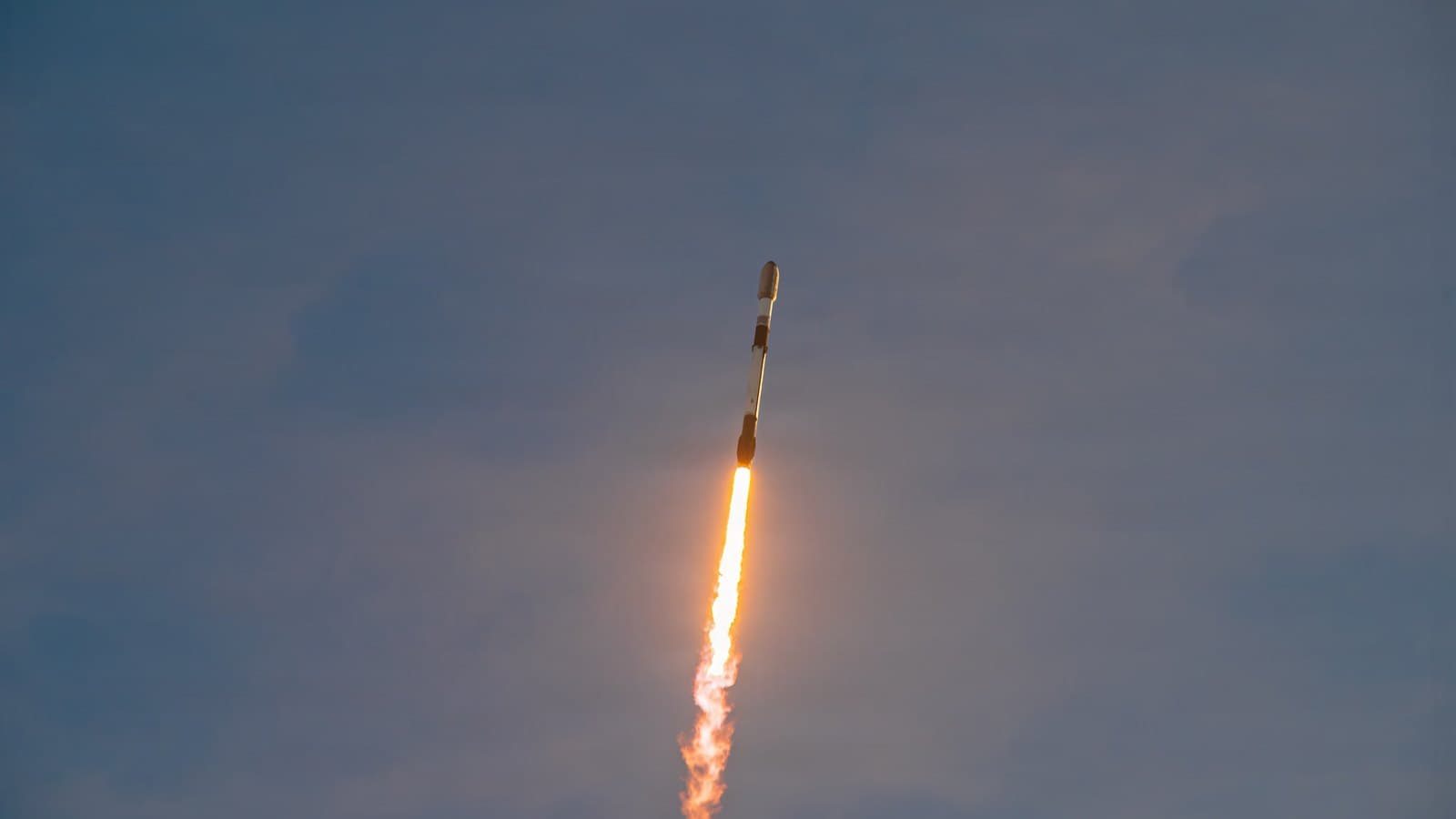
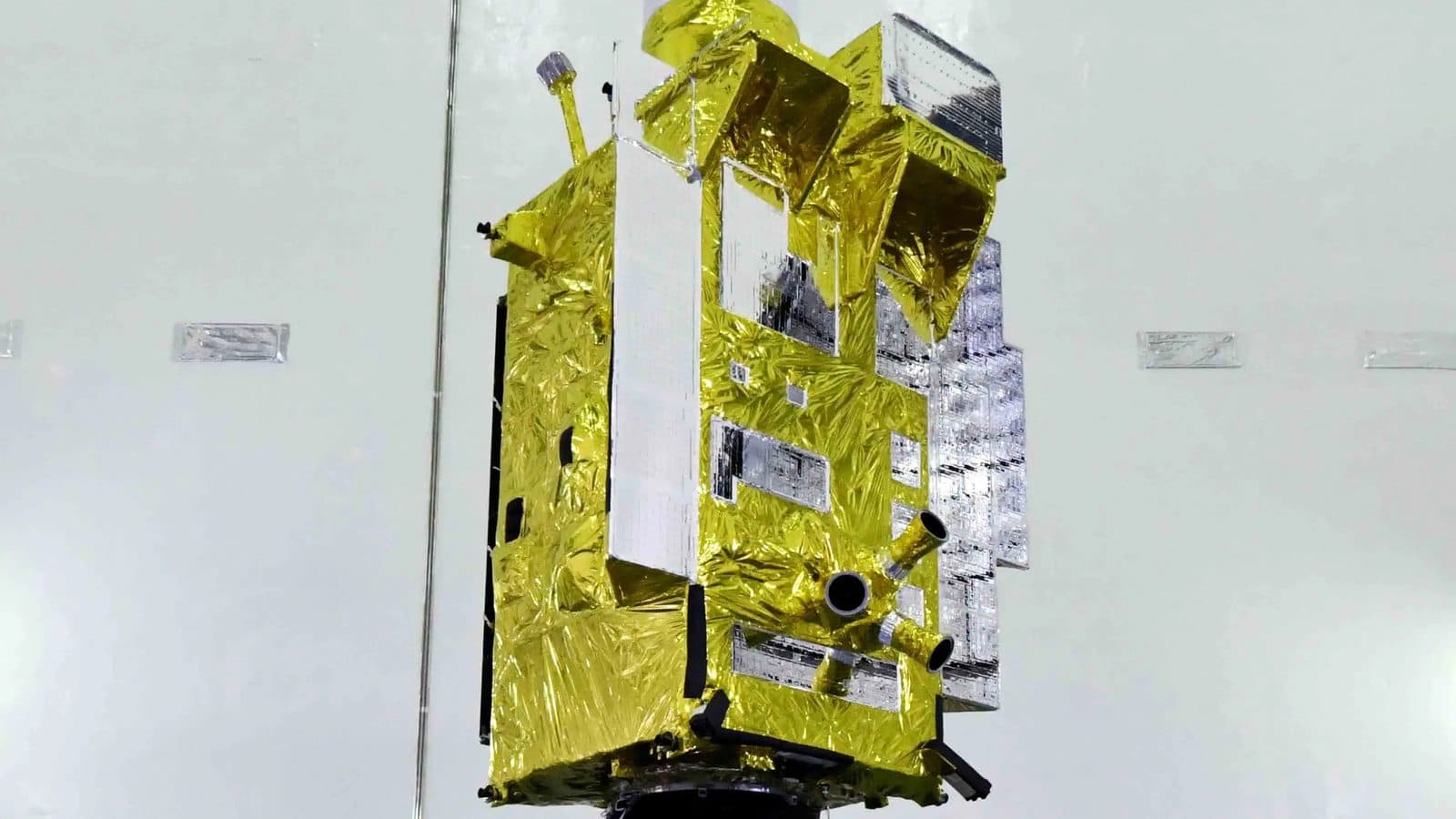
At 2:55 a.m. IST on Friday, September 4, 2026, the sky over Sriharikota was heavy with light rain when a Geosynchronous Satellite Launch Vehicle climbed away from the Second Launch Pad. The rocket, GSLV-F17, was carrying EOS-05, a 2,367-kilogram Earth observation satellite also known as GISAT-1A. About 18 minutes later, at roughly 3:14 a.m., the vehicle injected the spacecraft into its intended Sub-Geosynchronous Transfer Orbit. It was India's first launch success of 2026.
Related reading: NASA Asks Industry Whether Commercial Spacecraft Could Boost or Retire Hubble · Japan Launches MMX to Bring Back a Piece of Phobos.
The mission's real significance lies in the orbit EOS-05 is heading for. It is India's first imaging satellite designed to operate from geosynchronous orbit, roughly 35,786 kilometres above the equator (frequently described as "near 36,000 km"), where a spacecraft's orbital period matches the Earth's rotation. From that altitude it can hold station over the same broad region and observe it repeatedly, a capability ISRO has branded India's "Eye in the Sky."
Why geosynchronous imaging is different
Most Earth observation satellites work from low Earth orbit, a few hundred kilometres up. They circle the planet every 90 minutes or so, which makes them excellent at capturing fine detail but means they can only revisit a given spot at fixed intervals, depending on their ground track. A weather event, a flood surge, or a fire front can evolve substantially between those passes.
EOS-05 is built around a different trade-off. By operating from geosynchronous orbit, it stays synchronized with the Earth's rotation and keeps the same large area in view. It cannot match the sharpest low-orbit imagers for resolution, but it offers something they structurally cannot: persistence. As India Today explained ahead of the launch, the point of putting an imaging payload that high is to watch the same region continuously rather than catch it in periodic snapshots.
Geosynchronous orbit sits at a specific altitude (about 35,786 km), where an object's orbital period is 24 hours, matching the planet's rotation. A satellite placed there does not hover in the physical sense; it is falling around the Earth at exactly the rate the Earth turns. The practical effect is what matters: from the ground, the spacecraft occupies a fixed position in the sky, so a sensor can be pointed at the same target again and again without waiting for the geometry to line up. The trade-off is resolution. Distance is the enemy of detail, and a camera 35,786 km away sees each pixel covering a much larger patch of ground than a camera a few hundred kilometres up. EOS-05 is therefore not a sharper replacement for India's low-orbit imagers but a different instrument, optimised for coverage and frequency rather than for the finest detail.
That distinction matters for how the satellite is likely to be used. ISRO has said EOS-05 will deliver near-real-time imagery for weather monitoring and disaster management, including cyclone and flood tracking and forest fire detection. It is also intended for agriculture and environmental observation, and for persistent monitoring over strategically important regions of the Indian subcontinent and its surroundings. For a country that regularly contends with cyclones on two coastlines and severe monsoon flooding, a satellite that can stare at a developing system instead of waiting for the next overflight is an operational asset, not only a technical demonstration.
Getting from a transfer orbit to a working position
GSLV-F17 did not place EOS-05 directly into its final operating slot. The rocket delivered the satellite to a Sub-Geosynchronous Transfer Orbit, an elongated ellipse, with a perigee of about 171 km and an apogee of 31,260 km, that is a staging point rather than a destination. EOS-05 will use its own onboard propulsion system to gradually raise and reshape that orbit over a series of engine firings until it reaches its operational position. That orbit-raising phase is normal for geosynchronous spacecraft and typically takes days to weeks, during which the satellite cannot yet do its job.
A record flight, by the numbers
GSLV-F17 was the 19th flight of the Geosynchronous Satellite Launch Vehicle and the 107th launch from Sriharikota, according to ISRO. The vehicle stands 51.7 metres tall with a lift-off mass of 420.5 tonnes. It combines an S139 solid-fuelled core stage, four L40H liquid strap-on boosters, and a cryogenic upper stage, the part of the vehicle that does the final, precise work of placing a payload into a high orbit.
ISRO reported that the flight achieved a perigee of 171 km and an apogee of 31,260 km, with an orbital inclination of 19.28 degrees. The agency's normal targets for this mission profile are a perigee of 172 km and an apogee of 29,000 km, which means the vehicle beat its apogee target by a comfortable margin and left the satellite in a stronger starting orbit. The payload mass was 2,367 kg. Officials described EOS-05 as the heaviest satellite India has ever launched into a geosynchronous transfer orbit.
ISRO Chairman Dr. V. Narayanan framed the result against the vehicle's history. "I am very happy to announce that the GSLV-F17 vehicle has successfully and precisely injected the advanced Earth observation satellite EOS-05 into the intended and required orbit," he said after the launch, according to coverage by the New Indian Express. He drew a direct comparison with the programme's early days: "The first launch of the GSLV-D1 was done with a payload of 1,536 kg. Today, we have injected the heaviest satellite, a 2,367-kg satellite, using this launch vehicle."
Mission director Thomas Kurian described the flight as a milestone for the team. "This is a moment of immense pride and happiness for all of us," he said, per India.com's report. "The GSLV has successfully completed its 19th mission, carrying the EOS-05 satellite, an Earth observation satellite with a unique configuration capable of near-real-time imaging."
A low-orbit satellite sees a place in snapshots. A geosynchronous imager sees it continuously, and that changes what the data is good for.
After eight months without a launch
The most immediate reason GSLV-F17 mattered so much to ISRO was what came before it. The flight ended an eight-month launch drought for the agency and closed a stretch in which its workhorse rockets had suffered back-to-back setbacks. PSLV-C62 failed in January 2026, and PSLV-C61 had failed in May 2025. Coming on top of each other, the two failures put India's launch programme under close scrutiny and slowed the manifest while investigators worked through the causes.
The flight also carried a longer memory. In August 2021, the GSLV-F10 mission carrying EOS-03 failed when its cryogenic upper stage did not ignite. Because the cryogenic stage is the part of the rocket responsible for the final push to geosynchronous transfer orbit, that failure was especially consequential for exactly this class of mission. This time, The Hindu reported, ISRO leadership confirmed that the cryogenic stage completed successfully.
That combination (a return to flight, a debut success for the year, and a clean performance from the stage that failed five years earlier) is why the mission was treated internally as more than a routine delivery. A launch programme's credibility rests on cadence, and cadence had stalled. GSLV-F17 restarts it.
The distinction between India's two workhorse families also matters here. The Polar Satellite Launch Vehicle is the smaller, more frequently flown rocket used for low-orbit and interplanetary missions; the GSLV is the heavier vehicle needed for geosynchronous and other high-orbit payloads. The PSLV failures dented confidence in the vehicle India launches most often. A clean GSLV flight (carrying a heavier satellite to a harder orbit, and doing so with the cryogenic stage that had previously failed) answers a different and more demanding question: whether India's most capable rocket can be trusted with its most ambitious high-orbit missions.
What EOS-05 will do once it is on station
The satellite's value will only become clear over the coming weeks, as its orbit-raising concludes and its instruments are checked out. But the intended mission is broad. In the near term, ISRO expects the satellite to support weather monitoring, helping track the formation and movement of cyclones and the spread of floods. It is also intended to detect forest fires and to support agriculture and environmental monitoring, where a persistent view of large areas can reveal changes that periodic passes miss.
The strategic angle is harder to quantify but explicit in how the mission is described: persistent coverage over regions of interest on and around the Indian subcontinent. A geosynchronous imager cannot provide the resolution of a dedicated low-orbit reconnaissance satellite, but it can provide something else, a continuous watch on a wide area, with the ability to task the same region repeatedly without waiting for an orbital pass. For disaster response and for monitoring large, slow-moving situations, that is a different and complementary tool.
The two capabilities are complementary rather than competing. Low-orbit satellites, including India's established imaging fleet, provide the resolution and the detailed products that planners rely on; a geosynchronous imager provides the persistent wide-area view that gives those snapshots context. Operationally, the interesting question is not whether EOS-05 beats a low-orbit camera, but whether its continuous coverage shortens the time between an event developing and responders being able to see it.
The road ahead
ISRO has signalled that it does not intend to let this mission be a one-off. Six more launches are targeted within the current financial year, a manifest that includes the NVS-03 navigation satellite. The agency also plans the first uncrewed Gaganyaan mission within the financial year, a test flight that is central to India's human spaceflight ambitions. Meeting that schedule will depend on the same kind of clean performance GSLV-F17 delivered.
There is also a longer-term technical dimension. The GSLV is the vehicle India relies on to place heavier payloads into high orbits, and its cryogenic upper stage is an indigenous capability that took years to mature. A successful 19th flight strengthens the case for using the vehicle more often, including for commercial and strategic payloads. The more reliably the GSLV flies, the more of India's high-orbit ambitions it can carry.
What to watch
Three things will determine how this mission is remembered. First, the orbit-raising campaign: whether EOS-05 reaches its operational position on the expected timeline and whether its propulsion system performs as designed. Second, the commissioning results: ISRO has not yet detailed the satellite's imaging performance from geosynchronous altitude, and that is the number that will decide how useful it is in practice. Third, the rest of the manifest: whether ISRO can convert a single success back into a steady launch cadence, including the NVS-03 mission and the uncrewed Gaganyaan flight, both of which sit ahead in the financial year.
The bottom line
GSLV-F17 was, on the surface, a return to form after a difficult stretch, a rocket that had not flown in months delivering a record payload to orbit in the rain. But the more consequential story is the satellite. EOS-05 moves India into a category of Earth observation it has not operated in before, one defined less by sharpness than by constancy. If the spacecraft works as intended, it will not replace India's low-orbit imaging fleet; it will sit above it, watching the same wide swathes of the planet without blinking.
Tags

TPW Editorial
Editorial Team
TechPastWeek's editorial team reports and edits every story we publish. We research each piece against primary and credible secondary sources, and a human editor reviews and signs off before it goes live.