RWE Will Build a 400MW Battery at Moerdijk to Ease Dutch Grid Congestion
RWE took a final investment decision on 21 September 2026 to build a 400MW/1,100MWh battery at its Moerdijk power station in the Netherlands, with commissioning set for 2028.

On this page
Key takeaways
- RWE said on 21 September 2026 that it will build a 400MW and 1,100MWh battery storage system at its Moerdijk power station in the Netherlands.
- The system uses 208 lithium-ion containers and can deliver its full output for almost three hours, enough to cover the evening peak demand of around 500,000 households.
- It will connect through the site's existing high-voltage substation and will be dispatched to relieve grid congestion in the Noord-Brabant region under agreements with the transmission operator TenneT.
- Commissioning is planned for the second quarter of 2028, with construction due to start in due course.
- The battery also supports integration of the 795MW OranjeWind offshore project that RWE is developing with TotalEnergies.
RWE said on 21 September 2026 that it will build one of the largest battery storage systems in the Netherlands, a 400 megawatt and 1,100 megawatt-hour installation at its Moerdijk power station south of Rotterdam. The German energy group has taken a final investment decision, and it plans to have the system commissioned in the second quarter of 2028.
Related reading: LG Energy Solution's JF2 AC Link Qualifies as an NVIDIA DSX Ready BESS · Tesla Unveils a Flying Roadster 2 in Texas, With Production Set for 2028.
The project is a clear statement about where European grid investment is heading. Instead of building a new connection in a country whose transmission network is heavily congested, RWE will reuse infrastructure that already exists at the site, plugging the battery into the existing high-voltage substation at Moerdijk-Noord. RWE's announcement frames the project around that reuse, and around a second job the battery will do: helping to absorb and shift power from an offshore wind farm the company is building nearby.
The numbers behind the project
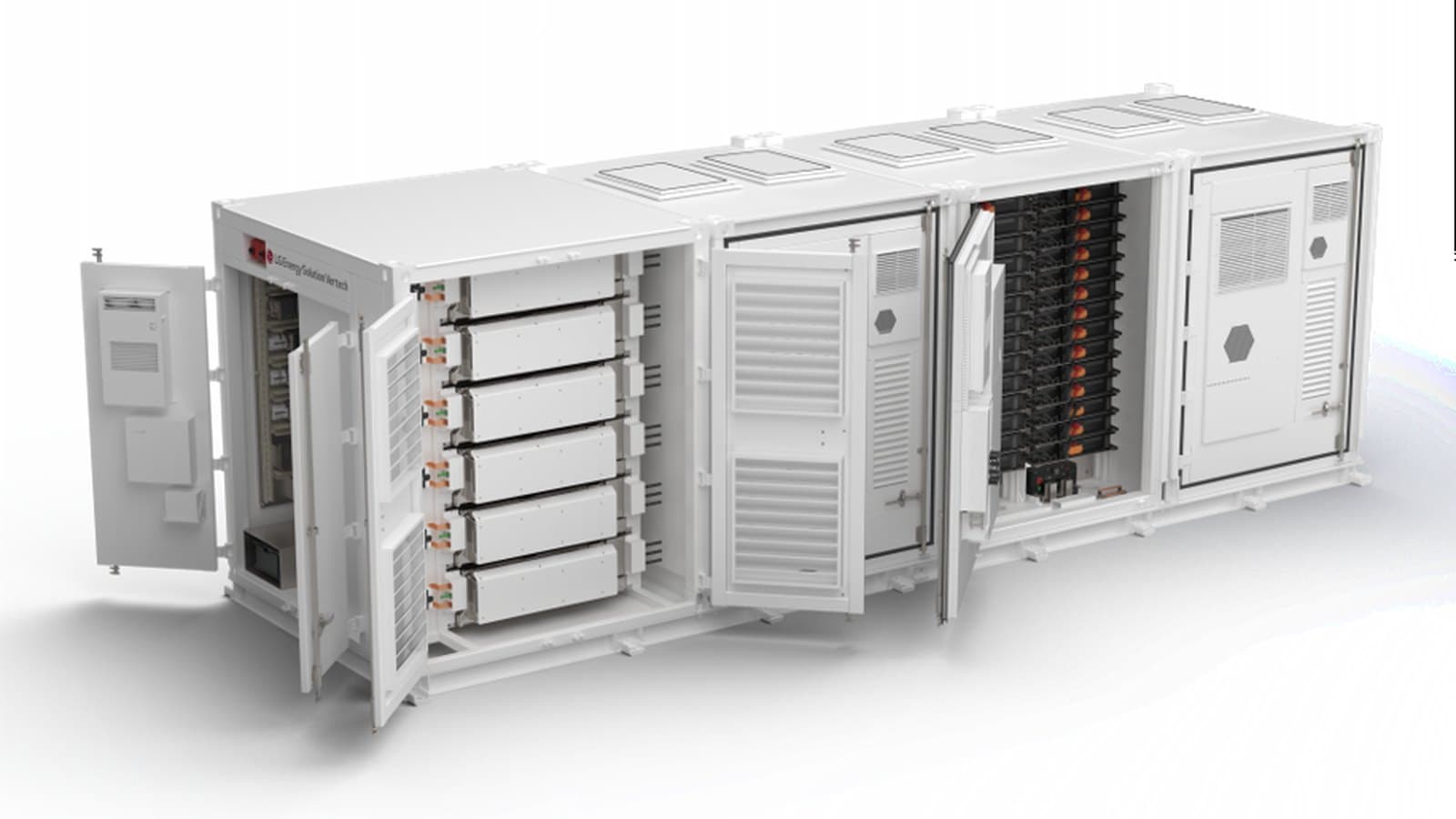
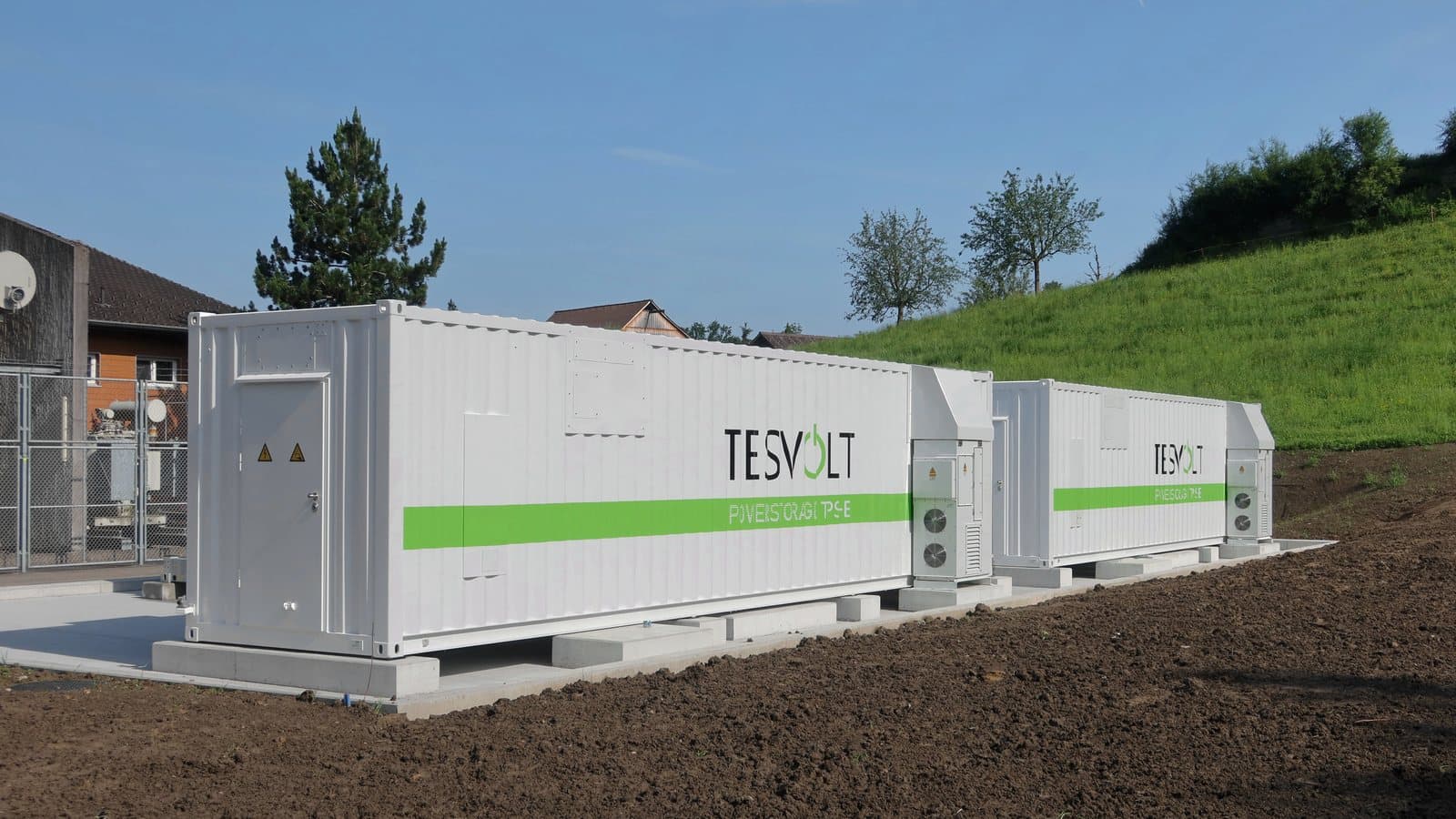
The Moerdijk battery will consist of 208 containers filled with lithium-ion cells. It can deliver its full 400 megawatts for almost three hours, a duration of roughly 2.75 hours. RWE says that is enough to cover the evening peak demand of around 500,000 households.
The site already hosts a much smaller battery, a 7.5 megawatt and 11 megawatt-hour system that RWE brought into commercial operation in 2025 and describes as the first synthetic inertia battery connected to the continental European grid. Inertia is the property that helps keep an alternating-current grid stable when supply and demand move apart, and it has traditionally come from the spinning mass of large power plants. Inverters with grid-forming controls can provide it electronically. The new battery will be roughly 100 times larger than the pilot and will also be equipped to supply instantaneous reserve.
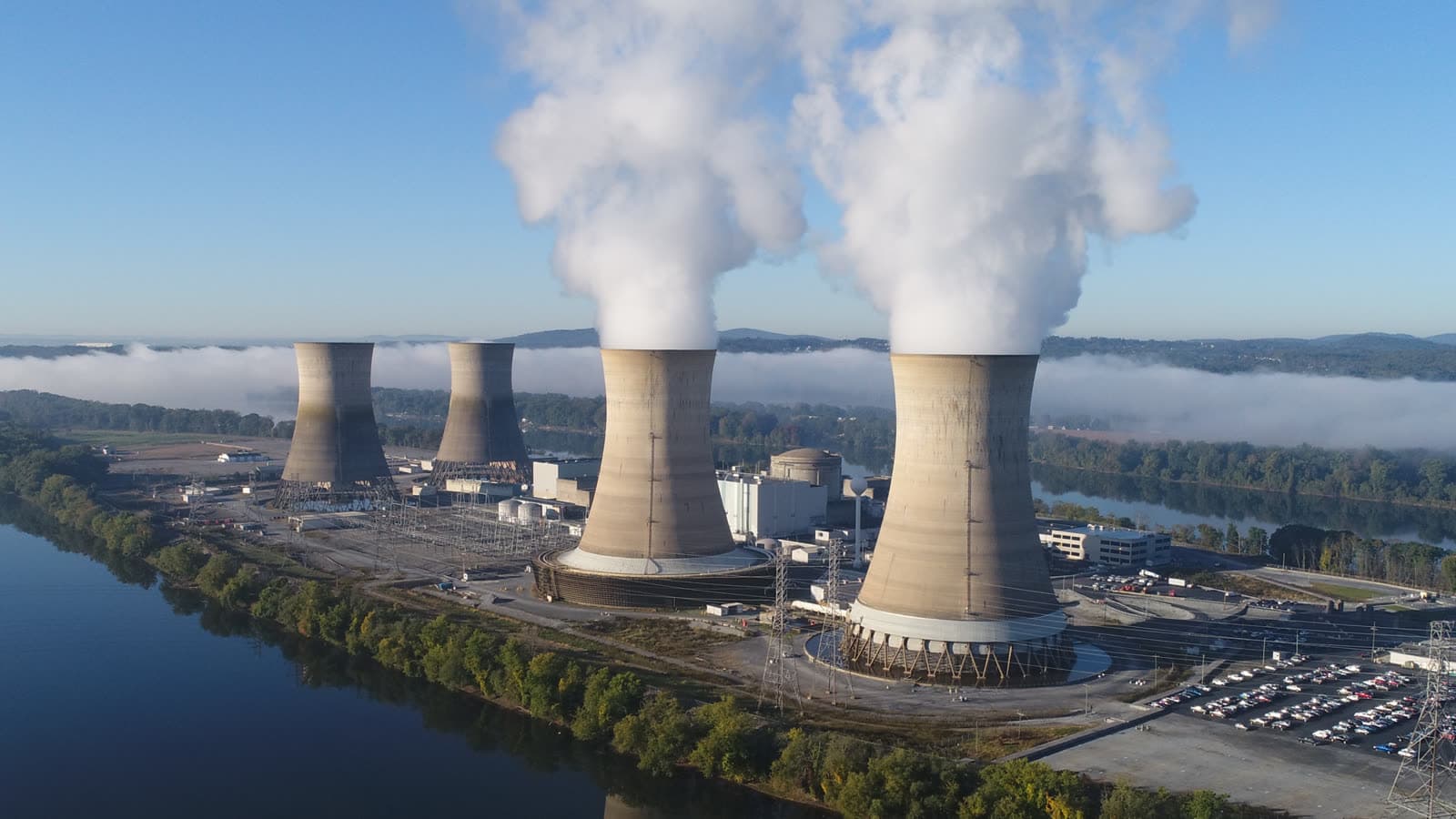
The Moerdijk site is primarily a 426 megawatt gas-fired combined-cycle plant, so the battery will sit next to the fossil generation it partly displaces at peak times. That arrangement is becoming common as operators seek to earn more from existing grid connections than a single generating asset can.
The system in one line: 400MW of power, 1,100MWh of energy, 208 lithium-ion containers, almost three hours of full output, connected through the Moerdijk power station's existing high-voltage substation.
Congestion is the real story
The Dutch grid is one of the most congested in Europe. Transmission system operator TenneT has a long backlog of connection requests, and adding large new loads or generators can mean waiting years. In that environment, a battery that uses an existing connection is worth more than its capacity suggests, because it can be built without queuing for new wires.
RWE and TenneT have agreed capacity steering arrangements under which the battery will be dispatched specifically to relieve congestion in the Noord-Brabant region. In practice, that means the battery charges when the local network has surplus power and discharges when it is stretched, smoothing flows rather than simply trading energy. RWE says the arrangement creates space on the grid for parties on the waiting list, and that TenneT and the regional operator Enexis will study the effect as part of a congestion management review in December 2026.
Why location beats size: a battery sited on an existing high-voltage connection can be built in years, while a new grid connection in the Netherlands can take far longer. Reusing Moerdijk's substation is what makes the 2028 commissioning date realistic.
That focus on congestion relief reflects a shift in how storage is valued. A battery can earn money in several ways: arbitrage between cheap and expensive hours, balancing services, and paid contracts to fix local network problems. In congested regions the last of those can be the most reliable, because it does not depend on wholesale price spreads remaining wide.
OranjeWind and the case for co-location
The Moerdijk battery is also part of the system integration plan for OranjeWind, a 795 megawatt offshore wind project in the Dutch North Sea that RWE is developing with TotalEnergies. Offshore wind output does not follow demand: it peaks when the wind blows, which may be at night when consumption is low. Storage lets a developer capture that power and sell it later, and it reduces the amount of curtailment when the grid cannot take the full output.
RWE has framed Moerdijk as a template rather than a one-off. The company operates a 35 megawatt and 41 megawatt-hour battery at its Eemshaven plant in the Netherlands, says it has battery projects totalling more than 1 gigawatt under construction worldwide, and has a target of 6 gigawatts of battery capacity by 2030. The strategy is to pair storage with existing generation sites and grid connections, which lowers the cost and the development risk compared with greenfield projects.
This is where the numbers get interesting for the wider market. A single 1,100 megawatt-hour battery is large, but it is a fraction of what a grid like the Netherlands needs as it adds renewables and electrifies heating and transport. The value of projects like Moerdijk is partly as proof that the model works: that a battery co-located with a power plant and an offshore wind farm can be financed, permitted and connected on a predictable timeline.
Why batteries are moving next to power plants
Moerdijk is an example of a wider pattern in European storage. Building a battery beside an existing generator solves the two hardest problems a standalone project faces: finding a grid connection and finding land that is already zoned and permitted. A plant like Moerdijk was built for a much larger power flow than the battery will use, so the substation and switchgear can be reused with modest upgrades. That saves years in a country where a new high-voltage connection can take far longer than the construction itself.
The economics follow from how a battery earns money. Grid-scale storage has three main revenue sources: arbitrage between cheap and expensive hours, frequency and balancing services, and paid contracts to solve local network problems. In a congested region, the last of those is often the most bankable, because it does not depend on wholesale price spreads staying wide or on a single market design. RWE's capacity steering agreement with TenneT is exactly that kind of contract, and it is what makes a project of this size financeable before the battery has charged a single megawatt-hour.
There is a policy dimension too. European grids are adding renewable capacity faster than they are adding wires, and curtailment, where wind or solar output is thrown away because the network cannot absorb it, is a growing cost. Storage that sits near both generation and demand reduces that waste and defers the need for new transmission. The Moerdijk battery is small against the scale of the problem, but it points at where the money is going: flexible assets on existing connections rather than new lines through crowded corridors.
What to watch
The first test is whether construction starts on schedule. RWE says only that it will begin "in due course", which leaves room for the kind of slippage that affects large infrastructure. The commissioning target of the second quarter of 2028 is credible for a container-based battery, but it depends on the substation work and the equipment supply chain holding up.
The second is how regulators treat storage in a congested market. The Moerdijk battery's economics lean heavily on being paid to relieve congestion, and those payments come from grid operators and, ultimately, from rules about who pays for network constraints. If the incentive regime changes, the returns on co-located storage change with it.
The third is the pace of the broader build-out. RWE's 6 gigawatt target for 2030 is ambitious, and hitting it will require repeating the Moerdijk model at many more sites. Each project needs a grid connection, a land position and a customer for the flexibility it provides, and those are not evenly distributed.
For the Dutch grid, the immediate effect is modest and the longer-term signal is large. A 400 megawatt battery does not end congestion in Noord-Brabant, but it shows that the fastest way to add capacity in a crowded network may be to build where the wires already are. That lesson travels well beyond the Netherlands, to every market where the queue for a grid connection has become the constraint on the energy transition.
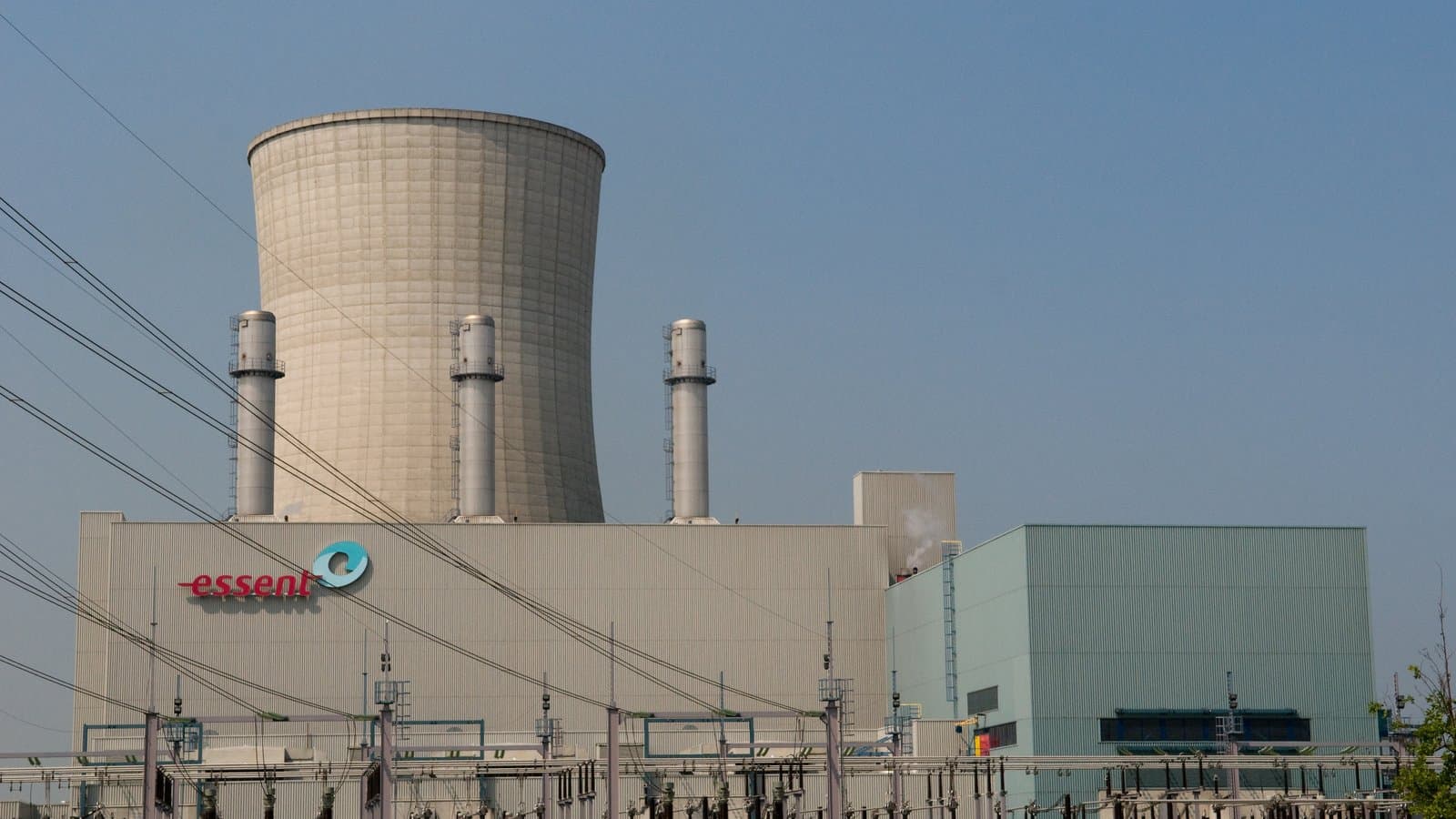
Cover: Essent Centrale Moerdijk, a Wikimedia Commons photo by Essent via Castel Communicatie (CC BY-SA 2.0).
Tags
Frequently asked questions
- What did RWE decide to build at Moerdijk?
- RWE took a final investment decision to build a 400 megawatt, 1,100 megawatt-hour battery energy storage system at its Moerdijk power station in the Netherlands, made up of 208 lithium-ion containers.
- When will the Moerdijk battery be operational?
- Commissioning is planned for the second quarter of 2028. RWE says construction will start in due course but has not given a precise start date.
- Why build a battery at a gas power station?
- The site already has a high-voltage grid connection that the battery can reuse, which avoids the years-long queue for a new connection in a congested Dutch grid. The battery also provides inertia and other grid services that help stabilise the network.
- What is OranjeWind?
- OranjeWind is a 795 megawatt offshore wind project in the Dutch North Sea developed by RWE and TotalEnergies. The Moerdijk battery is part of its system integration, helping to store and shift renewable power.

TPW Editorial
Editorial Team
TechPastWeek's editorial team reports and edits every story we publish. We research each piece against primary and credible secondary sources, and a human editor reviews and signs off before it goes live.